John 10:24-30 • Your Hand in His

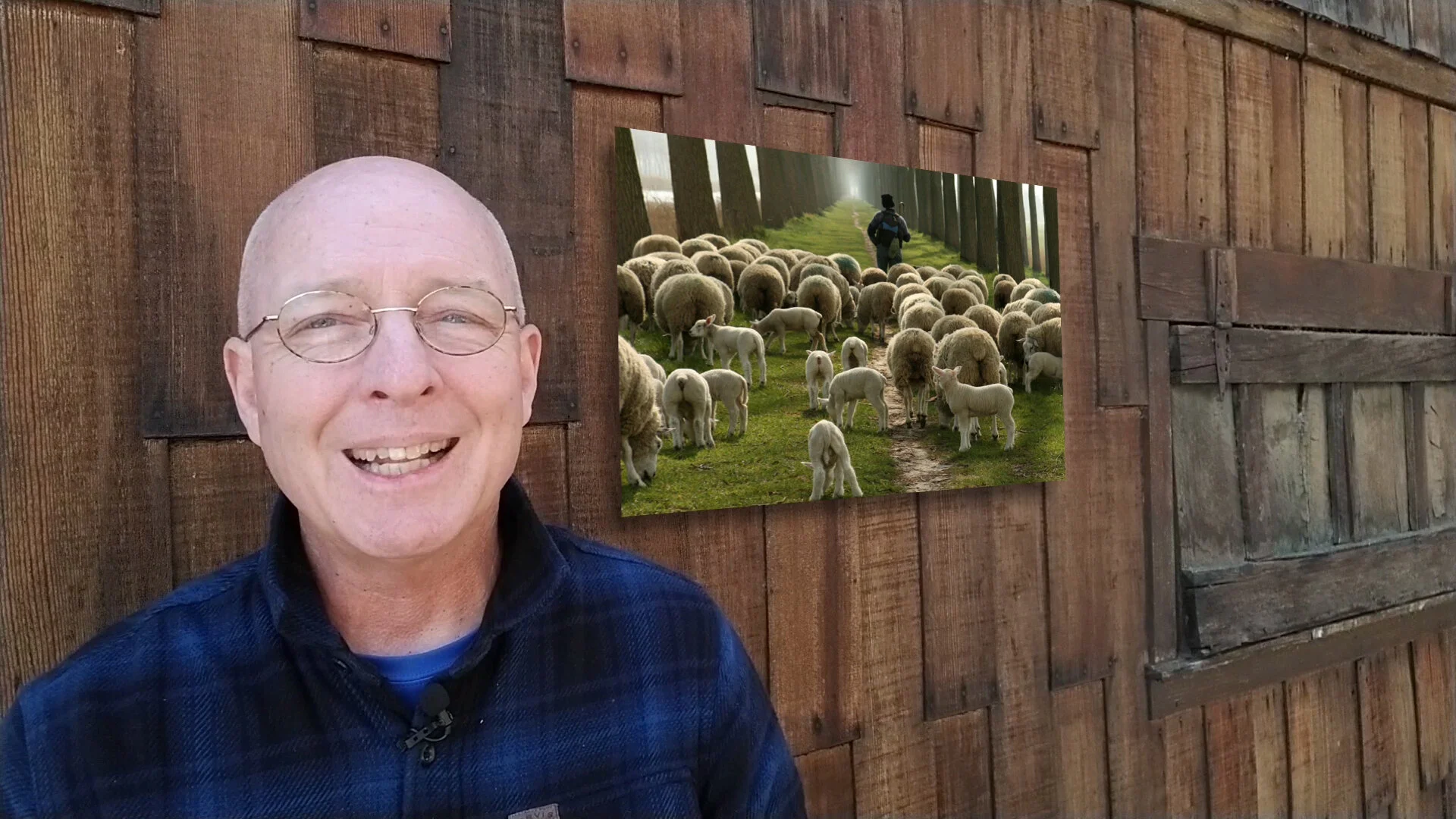
John chapter 10 verses 24-30 describe Jesus being ambushed by the Jewish leaders demanding he plainly answer the question of his messiahship. He responded by saying he’d already been as clear as possible on the subject both with words and with miraculous deeds. He told them the problem was not a lack of HIS clarity but a lack of THEIR faith. They were simply choosing not to believe the obvious and there was nothing he could do to change that. No amount of verbal debate or physical evidence can change a closed mind.

How sad to think that these men could be face-to-face with the Son of God and remain blind to that truth by choice, oblivious to his divinity not because they hadn’t seen or heard, but because they’d refused to acknowledge what they’d seen and heard.

But the Lord went on to say there are those of us he refers to as, “my sheep,” who choose to hear his message and act on it in faith by becoming his followers. And to us, he said he gives the twin promises of life in the hereafter and security in the here and now. He declared we will have eternal life and experience it within the safety of his protective grasp, a refuge beyond the reach of any attempt to separate us from him.

That powerful statement deserves to be rejoiced in, highlighted, bookmarked, and committed to memory. No one can “snatch” us from his hand. He will never let go of us.

The problem is…that doesn’t prevent us from letting go of him.

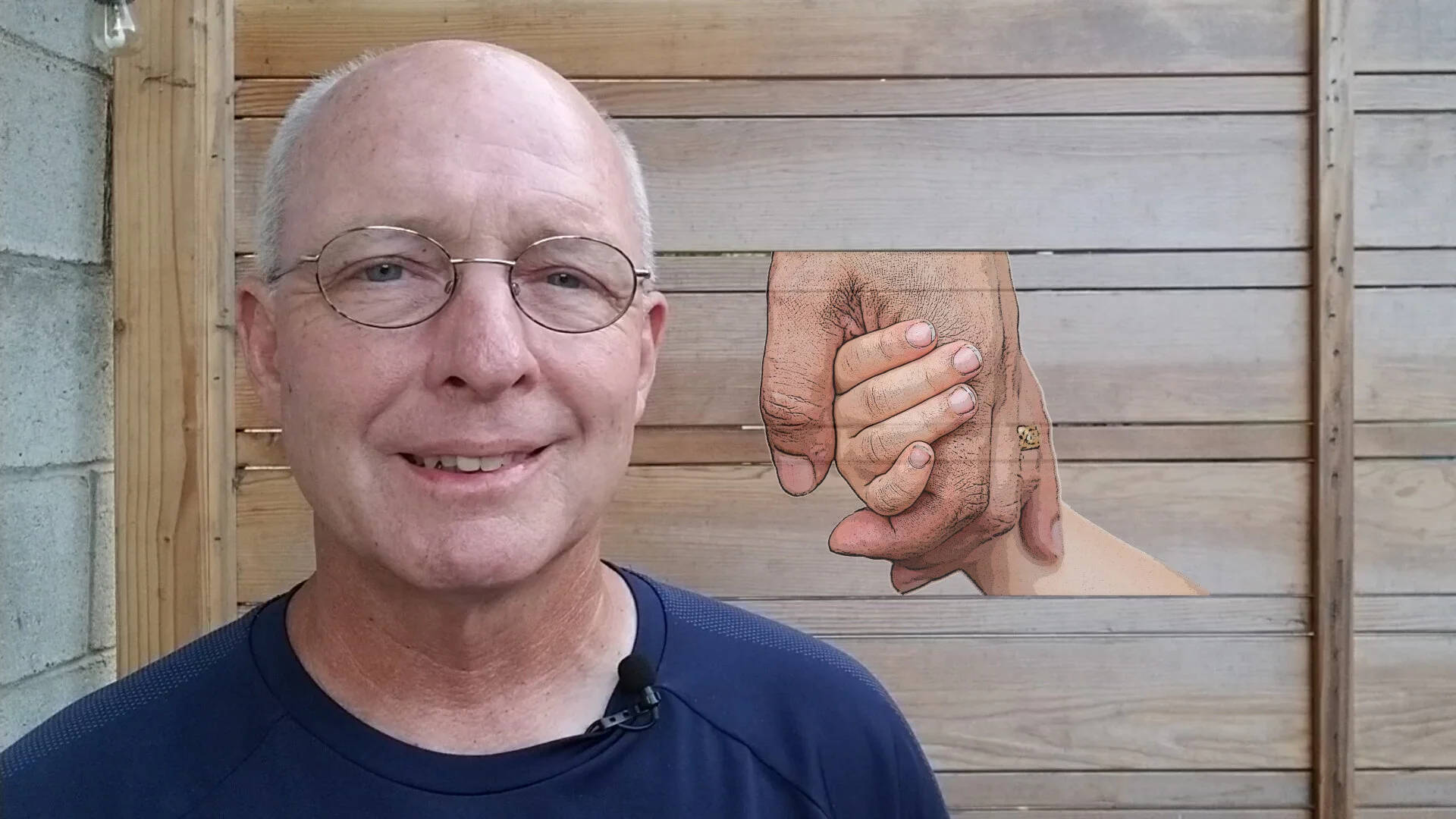
I took one of my young grandsons with me to the store the other day. As we made our way through the parking lot, I held his hand to ensure his safety. And as we walked, I could feel his grip. He was holding on to my hand too. The sensation was a heartwarming affirmation of his trust, but it was more than that. It was what made it possible for me to protect him. If he’d let go of me, pulled away, and insisted on going off on his own, he would have exposed himself to unanticipated dangers, and it would have been nearly impossible for me to keep him secure.

And that can happen in our relationship with Jesus if we in pride conclude we don’t need him or in fear assume we can’t trust him and then choose to loosen our grip on him. His promises remain, but we are in jeopardy of removing ourselves from their fulfillment and becoming spiritually vulnerable. And the devil is always ready to exploit that vulnerability to pry our souls loose from their resting place within the Savior’s hand.

The beautiful thing is you don’t have to enable that strategy. If for any reason it seems the strength of your hold on Jesus has weakened, his on you is powerful. Press into it. Right now determine with fresh commitment to hold tightly to him in faith and firmly keep your hand in his.


John 10:22-23 • A Weather Report

I believe what the Bible says of itself, that it is God speaking to us. And because I’m convinced the Almighty is never superfluous, I find myself drawn with curiosity to passages containing words that don’t at first glance seem necessary. Over the years, I’ve learned that these are usually designed to attract our attention and reveal rich meaning when carefully considered.

John 10:22 and 23 contain one of these. They open a section describing a confrontation of Jesus by the Jewish leaders that took place about two and a half months after his parable of the Good Shepherd. They provide us with the time of year, location, reason for his being there, and a description of the weather. That’s the one that gets me. Why do we need to know what the weather was like?

I’ll come back to that in a minute, but first let’s note that this showdown took place in Solomon’s porch, a covered, outer corridor on the east side of the temple complex. But it would also become the meeting hall of the first Christians following the birth of the church on the Day of Pentecost. And I think it’s super cool to contemplate that Jesus would so thoroughly triumph over his opposition that this location where the Jewish elite tried to rhetorically and literally ambush him would become the fountainhead of his gospel’s global triumph as his followers took the good news from there to the ends of the earth.

The text also informs us that this event occurred during the Feast of Dedication which was celebrated in mid-December. That lets us know when Jesus was there, but it also explains part of the reason why. This feast was an annual commemoration of the cleansing of the temple by the Maccabees in 167 B.C. and the restoration of worship there after it had been very purposefully desecrated by Antiochus Epiphanes. It was an event worth celebrating for sure, but this was not one of the feasts prescribed by God in the Old Testament and requiring a Jerusalem pilgrimage. So why did Jesus visit the temple during that time and why is his attendance noted?

I think he was using the occasion of this celebration of temple-cleansing as a not-so-subtle announcement that he would soon be offering his life’s blood as the ultimate agent of cleansing for all the ways sin has desecrated our lives so that he could make it possible for us to become temples of the Holy Spirit as described in 1 Corinthians 6:19.

And that brings me back to the weather report.

The fixed date of the Feast of Dedication already established the time of year as the month of December, so why add the phrase, “it was winter,” unless God wanted us to notice something else?

The Greek word translated as “winter” here literally means storm or tempest. So, the Bible is calling attention to the fact that Jesus had entered Jerusalem that day during a rainstorm. I’m sure you’ve noticed that good novelists often set the mood for dark scenes in their stories by using vivid descriptions of bad weather. And although I’m certainly not equating this passage from the Gospel of John with a work of fiction, I do think God has included this phrase to evoke a feeling.

As Jesus’ earthly ministry was about to enter its final months, I think God intended us to engage our spiritual imaginations at this point by visualizing him in an open portico, exposed to a cold rain, bracing for another round of harassment by the religious elite, but advancing steadily toward the cross.

It’s way too easy to read the Bible dispassionately like a textbook. But this simple phrase calls to us, inviting us to reconnect with the narrative in a deeper, more emotional way and to feel something we may have lost touch with – gratitude.

As we read the account of our savior moving through the gathering spiritual storm toward our redemption, let’s not forget that although fully God, he was also truly human and experiencing all of this from that perspective. And let’s allow this simple image of Jesus in the rain to fill our hearts with renewed reverence and grateful worship.

John 10:17-21 • Authority Under

John 10:17-21 contains the closing stanza of Jesus’ shepherd parable and the response to it by the religious elite.

Having earlier described himself as the Good Shepherd who lays his life down for the sheep, Jesus said he does so as an expression of his power, a translation of a Greek word used in the original text which means having authority to act. He subtly acknowledged his awareness of the Jewish leaders’ plan to kill him that continued percolating in the background, and he declared that when the time finally came, his life would not be taken in weakness but freely given as an exercise of his authority. He said the use of his power in this way was commanded by and pleasing to the Heavenly Father.

That completely baffled the Pharisees. It was simply unheard of that someone would use their power to serve others. In their experience, leaders gained and exercised power over others for their own benefit. Jesus had expressed a concept so foreign to them that they began to debate among themselves whether he was demon-possessed and insane.

But some of them had trouble accepting that explanation because they’d just witnessed a display of that kind of authority when Jesus healed the blind man on the previous sabbath. He had used his power to bless the man with sight and then didn’t even stick around to get the credit. He had nothing to gain and much to potentially lose by breaking sabbath restrictions to minister to him. But he did it anyway.

And that’s the very definition of authority in God’s dictionary – humbly employing every right, advantage, position, gifting, influence, mastery, skill, insight, prestige, sway, strength, prerogative, license, clout, and esteem we possess in the service of others no matter the cost. As his children, we have been given the privilege and responsibility of modeling a different way to be powerful.

But it turns out that’s easier said than done. We often appear to be just as enamored with the idea of hierarchical positions of power as anyone else. That’s why in Matthew 20:25-28, Jesus responded to the request of two of his disciples that they be given positions of power in his kingdom saying:

"You know that the rulers of the Gentiles…exercise authority over them. Yet it shall not be so among you; but whoever desires to become great among you, let him be your servant…just as the Son of Man did not come to be served, but to serve, and to give His life a ransom for many."

He taught us by his words and his life that the righteous way of expressing power is not from a position above others but from beneath them, lifting them up instead of pressing them down, not an authority over but an authority under.

And our world is in desperate need of that example right now. Our institutions – commercial, political, social, educational, judicial, relational – are all engaged in a fierce wrestling match over the questions of who should have power and how it should be used.

My friends in the faith, let’s rise to the challenge, or should I say bend beneath it. Instead of joining the world in striving to get to the top, let’s race each other to the bottom. Let’s put the power of our God on display by shouldering the weight of the burdens that don’t belong to us but are ours to bear as we serve others in his mighty name.

John 10:16 • One Flock

“There will be one flock.”

That statement by Jesus recorded in John 10:16 as part of the summation of his shepherd parable would have been shocking to his audience of Jewish religious leaders. They would have interpreted his teaching through the lens of their Hebrew-centric paradigm. So, they would have been blindsided when he said that his flock will include sheep “which are not of this fold.” And because they were likely in the temple when they heard this, his use of the word, fold – which literally means, court – would have suddenly taken on special significance.

The Jerusalem temple complex was designed as a series of courts progressing inward toward the Holy of Holies. Non-Jews were restricted – under threat of the death penalty, by the way – to the outermost of these called the Court of the Gentiles. Jesus was likely addressing his parable to the religious elite within one of the inner courts, and the symbolism would have been hard for them to miss.

He was symbolically if not literally pointing toward that outer court of people they treated with contempt when he announced that his flock would include the excluded. And he was emphatic that their inclusion would not be as an underclass. They would be equally integrated, fully assimilated.

“There will be one flock.”

They shouldn’t have been surprised by this, because of course, this had been God’s plan from the beginning. From the moment he set apart Abraham and his descendants as his chosen people, the Lord made clear his intention was to introduce himself and his blessings to the whole world through them. In fact, the prophet, Isaiah, specifically said that the Messiah would be a “light to the Gentiles” (Isaiah 42:6; 49:6).

So, Jesus was simply announcing that he was fulfilling this divine plan. His message or good news was gloriously inclusive. The most quoted verse in the New Testament is John 3:16 where he declared a whoever-gospel. He said eternal life is available to anyone who places their faith in him, and that had to mean regardless of race, ethnicity, gender, or personal history.

“There will be one flock.”

So why do we as Jesus’ followers have such a hard time with this? Martin Luther King, Jr. once said, “…the most segregated hour…is eleven o'clock on Sunday morning.” And he was talking about the ways that Christians tend to splinter into groups of affinity – including race – when we gather to worship.

But my question is not really about that. I understand people naturally like to hang out with others that have similar backgrounds and relate better to certain communication and music styles. I even celebrate the amazing variety of church ministry approaches around the world.

My concern is that we sometimes seem to allow our diversity to mask division and our preferences to mask prejudices. So, instead of displaying the unity of the Spirit, we often appear to reflect the fragmentation of the world. And when we do, we betray one of the most beautiful and foundational aspects of our faith.

“There will be one flock.”

I’ve recently spent time in prayer acknowledging and repenting the ways I’ve failed in this. And I’ve specifically invited the Holy Spirit to make any needed adjustments to my soul’s perspectives so that I can be part of the fulfillment of this aspect of his redemptive purposes. Would you be willing to join me? Perhaps together, with our hearts realigned to his values, we can better represent what he meant when he said…

“There will be one flock.”

John 10:11-15 • The Good Shepherd

As the shepherd parable recorded in John 10 neared its conclusion, Jesus uttered another one of the seven “I am” statements found in this Gospel. He twice identified himself as the good shepherd and described two specific ways he fulfills that role.

In verse 11, he said he gives his life for the sheep, considering them so valuable they’re worth sacrificing himself for. And in verse 14, he said he knows them, pursuing the kind of knowledge that’s more about relationship than information. In fact, in verse 15, Jesus described this knowing as the kind he experiences with the father. And he said it’s the reason he’s moved to lay his life down for us.

In verses 12 and 13, these two characteristics of the good shepherd are contrasted with those of a hireling – a rent-a-shepherd – one who prioritizes his own well-being over the flock’s and has no interest in developing a caring relationship with them. It’s certain the Lord meant this comparison to shine a harsh light on the self-serving “shepherding” practiced by the Pharisees, but I think he was also providing a way to identify any impostors among those who would seek to lead his people.

The Greek word translated as “shepherd” in this passage is the same word translated as “pastor” later in the New Testament and used to describe those who serve as leaders in the church. And as someone who’s had the privilege of ministering to others under that mantle for several decades now, the Lord’s example here is deeply moving to me and hits very close to home.

“Pastor” is not an honorific or a title of respect that precedes a church leader’s name. It’s not a station or position of achievement. It’s not a line item in the church budget under salaries. It’s not a sign on a door in the church office or on a reserved parking spot closest to the entrance. It’s most certainly not a career path. According to Jesus, it’s the description of someone who is so deeply invested in a relationship with God’s people that he or she is willing to live a life of sweeping personal sacrifice to support the spiritual wholeness of those in their care.

I want to make sure I never forget this exquisite definition our Lord gave. Even though all of us who take up the shepherd calling will fulfill it imperfectly, I want to keep looking to him as my example. I want to avoid any drift toward becoming part of a clergy class that’s enamored with attaining preference, celebrity, and recognition.

Even though Ephesians 4:11 tells us pastoral leaders are among the gifts Christ has given his church, verse 12 makes it clear that they’re not part of an elite group. In fact, their role is to help equip believers for their ministries. In a very real sense, every believer has been called and equipped by Jesus to shepherd those he’s placed in the circles of our influence whether it’s our family, friends, neighbors, and workmates or an entire church congregation. And we’ve been assigned to care for them in the way he cares for us.

We all need pastors like that, and we all need to become pastors like that.

So, even if what I just said scares you a little because you’re having trouble seeing yourself in that role right now, I encourage you to prayerfully welcome the good shepherd to identify the flock he’s given you and be willing to honor him by loving and serving them sacrificially.

John 10:7-10 • The Door

John’s Gospel contains seven statements from Jesus that begin with, “I am.” They allow us to hear the Lord describe himself in his own words. And as the shepherd parable resumes in verses 7-10 of chapter 10, we encounter one of these self-descriptions when the Lord said, “I am the door.” And he used this image to illustrate another in the series of stark contrasts between the shepherd and the thief as he revealed the differences in their missions.

It’s obvious that Jesus cast himself as the shepherd in this story. And as the focus of his affectionate care, you and I are the sheep. But the metaphor of the thief is applied more broadly. It certainly includes the Pharisees and other Jewish religious leaders in the crowd he was addressing. But it also clearly points beyond them to anything or anyone opposed to the sheep, and by direct implication, refers to the devil, the enemy of God’s loving purposes for people.

Jesus said the thief’s strategy is to steal – attempt to plunder everything of God’s good intentions for us; to kill – deceive us into offering ourselves to be sacrificed to false gods such as materialism, pleasure, and power; and to destroy –  not only extinguish our lives but scar them beyond recognition.

In contrast, Jesus said his mission is to give us life. And the Greek word translated here is extremely significant. It’s the word the New Testament uses for the kind of life God has. Jesus was plainly stating that he came to offer us something far more than just an extension or enhancement to the biological life we already have. His purpose is to escort us into the power-filled life of the spirit, and not just some limited, modified, or throttled version. He said he came to give it excessively, extravagantly, abundantly.

And that’s why viewing Jesus as a very specific kind of door is important. Counterintuitively, He identified himself as the door that provides safety by being open not closed.

As I record this, the whole world has been shut down for a few months due to a global pandemic. As a protection against a deadly virus, people everywhere have been confined to their homes, and we’re all starting to go a little stir-crazy. In fact, substance abuse, domestic violence, and suicides are up because living in fear behind a locked door isn’t healthy.

And contrary to what many think, the life Jesus offers is not one of confinement focused on keeping the thief out. It’s really the opposite of that. The Lord’s power to overcome any threat to us is so great that it renders that threat irrelevant. As a result, he’s able to offer us a life of true freedom unencumbered by the weight of fear so that we can come and go without concern.

This is not a denial of the very real and sinister strategy of the thief. It’s a description of a life so abundant with the riches of the shepherd’s love and power that the possibility of experiencing harm while in his care is simply meaningless.

He’s the open door swinging out as an invitation to explore the rich pastures of his limitless grace and swinging in to welcome us home to the comfort of the fold all within the security of his abiding presence. And offering that kind of life is why he came.

So, let him unlock the constraints of any fear that has imprisoned you in a small and stifled space. He wants to introduce you to life abundant.

John 10:3-6 • That Exquisite Waveform

Jesus' shepherd parable continues in verses 3-6 of John 10 where he defined another one of the severe contrasts between the shepherd and the thief who he also referred to as a stranger. He described it as a difference in how the sheep respond to their voices. He said the sheep follow the shepherd because they know his voice but refuse to follow a stranger because they don’t know his.

The Greek word used in the original text means to know from observation. It’s the kind of knowing you gain by witnessing something firsthand. In other words, Jesus was saying that the sheep experience something with the shepherd that causes them to want to become attentive to the sound of his voice. And he made it clear that that something is a genuine concern for their well-being.

He said sheep recoil from a stranger. They don’t trust him and have no incentive to develop a sensitivity to his voice because he hasn’t demonstrated any interest in their welfare.

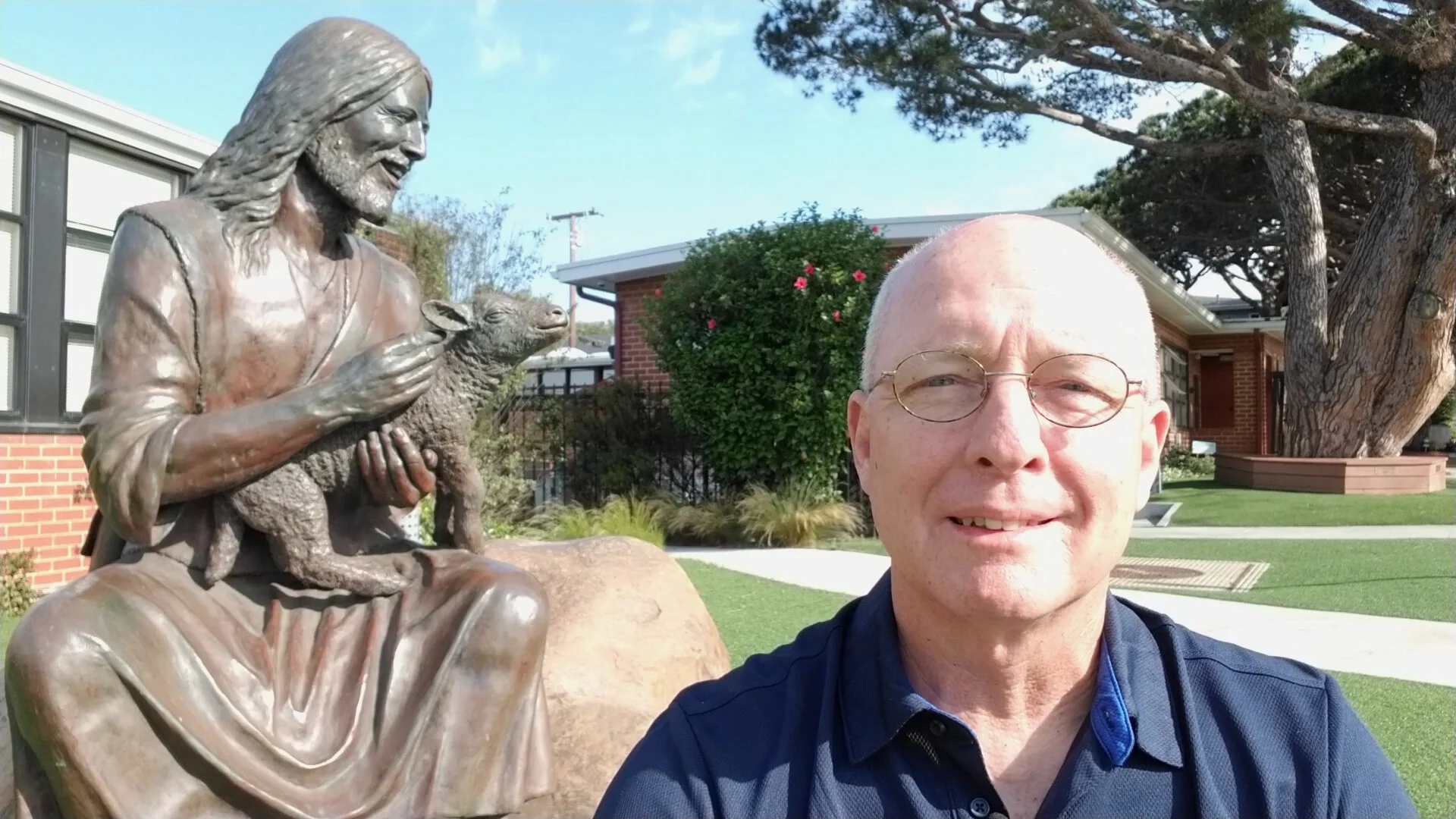
On the other hand, Jesus said the shepherd personally escorts the sheep to pastures where they can feed in safety, not only cares for the flock but for each individual lamb, and calls them by a unique name he’s given each one.

Jesus clearly meant for us to understand that he’s the shepherd in this story and was illustrating the tenderness of his affectionate care for people. He was revealing his desire to invest in a relationship with each of us. And it’s that daily-demonstrated, individualized compassion that stirs our desire to know the sound of his voice – to hear and respond to it. We don’t want to miss a single word, especially when he lovingly calls us by name.

One of the great pleasures of retirement is that my wife and I no longer have to wake up to an alarm clock signaling that it’s time to get ready for work. But a few days ago, we needed to make sure we were on time to volunteer for the early-morning shift at a local food bank. So, as I climbed into bed the night before, I said, “Alexa, set an alarm for 7:00 tomorrow morning.” Our voice assistant responded to the audio waveform associated with that name and processed my request. Now, talking to a machine is still a little hard for me to get used to, but I remember thinking that even an inanimate piece of digital technology comes to life – so to speak – at the sound of its name.

We were meant to come alive at the sound of our shepherd’s voice as he calls to our souls with that exquisite waveform we recognize as uniquely ours. It lights us up in the spirit with the awareness that we’re deeply known and loved. Can you hear it? Let’s lean in and listen close so we can become increasingly sensitive and responsive to that glorious sound.

Let’s not be like the Pharisees described in the final verse of this passage. We’re told that the sweet intimacy Jesus was describing was such a foreign concept to them that it all went right over their heads. They just couldn’t comprehend a God like that. But this is the God we have. He’s our shepherd. His name is Jesus.

John 10:1-2 • Stray Cats and Thieves

The first half of John 10 is most likely a continuation of the pointed rebuke of the Pharisees by Jesus that concluded the previous chapter. But when he used the phrase, “Most assuredly, I say to you," it meant he wanted even greater attention to be given to what would follow. And what follows is a lengthy parable about the shepherd and the sheep.

A parable isn’t a riddle. It’s not meant to hide meaning. It’s meant to reveal it. When Jesus used a parable, he was painting a word picture describing images and experiences that would be very familiar to his hearers and building a bridge of understanding from something they already knew well to something he wanted them to discover.

So, he used this beautiful shepherd/sheep illustration to describe the kind of relationship he wants to have with his followers. The passage is saturated with rich significance for every believer. And even though most of us today aren’t nearly as familiar with references to shepherding culture as his original audience, the heart of Jesus and the truths he conveyed easily bridge that gap.

The first two verses introduce the hero and the villain of the story and offer the first of several stark contrasts that are made between them. As the starting point of his parable, Jesus said the shepherd enters the sheepfold – an enclosure that provides safety for the sheep – through the door, but a thief tries to gain access by other means.

He was saying that anyone lurking in the shadows and attempting to infiltrate the security of the fold is a robber, someone intent on causing harm. And although he was clearly indicting the religious elite with this illustration, I think it’s also clear he meant for us to understand that anything seeking to breach the environment of our spiritual home is a serious threat.

A couple of days ago, I woke up in the middle of the night and noticed light from our side yard security lamp filtering in through our bedroom windows. It’s activated by a motion sensor. So, I knew something was moving out there. And although it was probably just a stray cat, it unnerved me because only unwelcomed guests seek to access a home by means other than the front door.

Is anything circling your heart’s defenses today in search of an unguarded way into that sacred space? What about fear, unforgiveness, guilt, pride, self-pity, lust, depression, anger, shame, or selfishness? These aren’t just stray cats. These are actual threats to your spiritual life. Don’t just lie there ignoring the light filtering in from your soul’s security lamp. The Holy Spirit may be alerting you to something moving out there that doesn’t belong, something the shepherd wants to protect you from if you’ll let him. But remember, he comes through the door. You’ll need to open it and invite him in.

We’ve all been given the freedom to try and deal with these intruders on our own, but in my experience, that doesn’t usually work out too well. On the other hand, I’ve noticed that when I stop pretending I can secure the premises of my inner life by myself and choose instead to welcome and respond to the shepherd’s powerful presence, I’m increasingly able to rest deeply in the safety of the fold.

I’m certainly not an expert on the subject, but I’ve read that because sheep are prey animals with little means for self-protection, their natural state is a hyper-vigilance that enables them to be ready to quickly respond to danger. But their well-being can be adversely affected by living with so much anxiety. So, shepherds work hard to help them be at peace.

And that’s what Jesus wants for each of his lambs. It’s what he wants for you. He’s ready if you are. Just open the door.

John 9:35-41 • Highway of the Upright

A man who’d been blind from birth received his sight when Jesus made mud from dust and spittle, smeared it over his sightless eyes, and sent him off to wash at a nearby pool. But the Lord had already moved on by the time he returned to thank him. So ironically, the man whose eyes had been miraculously opened didn’t get the chance to actually see the one who gave him that gift.

But John 9 verses 35-38 describe the very tender scene when the two of them met again.

It happened after the man had been excommunicated for boldly standing up to the Pharisees in defense of Jesus during the intense interrogation that followed his being healed on a Sabbath day. They cut him off from his family, community, and synagogue.

When the Lord heard what happened, he searched for, found, and revealed himself to him as the Son of God. And as the man’s newly opened eyes resolved the image of his healer and messiah, his grateful heart expressed itself with sweet faith and worship.

Then, in verses 39-41, Jesus brought the lesson of this whole episode into sharp focus. He said that he’d come into this world to give sight to those who desire to be healed of their spiritual blindness and to judge those who in their pride refuse to admit their need.

I know which group I want to be in, but I don’t think my membership can be taken for granted. Here’s why. Pride is the issue. And dealing with the relentless encroachment of that temptation is an ongoing process. Whenever I give place to it, I lose something of my spiritual visual acuity. And unless I take decisive repentant action, I incrementally drift back toward that pharisaical self-deception where I don’t realize how blind I’ve become.

For instance, the other day, my wife and I were watching an online church service, and I had already made three or four negative comments about the presentation’s mediocre production values before I realized how much pride had overtaken me. It had totally blinded me to the significance of what God was doing through that church’s efforts. Thankfully, the Holy Spirit’s conviction broke through, and as I confessed my sin, I could literally feel the eyes of my soul opening back up to the beauty of the heart of God on display in that program. It was as though a dark veil had lifted.

I hope this doesn’t sound presumptuous, but I’ll bet you’ve had similar experiences. If so, you’ll understand what I mean when I say I want to stay on guard against that kind of arrogance. 1 Timothy 3:6 tells us that when we become puffed up with pride, we’re guilty of the same sin as the devil. And I want to stay as far away from that as possible.

I know you do too. So, let’s heed the advice of Proverbs chapter 16. Just before telling us that “Pride goes before destruction,” it says, “The highway of the upright is to depart from evil.” Let’s strive, by the power of the Holy Spirit, to get on and travel that highway at top speed.

John 9:24-34 • A Slap to the Face

In John chapter 9 verses 24-34, the Pharisees continued their interrogation of the man who’d been healed of blindness. They were determined to find a way to turn this miraculous event into a means of condemning Jesus by twisting it into a Sabbath violation. But frustrated by their failure to discredit the man’s testimony or use it for their purposes, they reached a boiling point. Like a belligerent attorney in a courtroom drama, they demanded that he glorify God by finally telling the truth and admitting Jesus was a sinner.

Instead, he uttered the words that would inspire the most powerful line in the lyrics of one of the most recognized songs in the world, Amazing Grace. Staring directly into the teeth of the intimidating religious elite, he declared, “One thing I know: that though I was blind, now I see.”

Still, unwilling to give up their pursuit, the Pharisees decided to start over from the beginning. They commanded the man to tell them once again what Jesus had done and how he did it. But clearly wearied by this nonsense, he responded with a question of his own, one dripping with bold sarcasm. He asked them why they wanted him to repeat himself. Did they want to become followers of Jesus?

They reacted by reviling him – which literally means they stabbed him with words – and invoked the authority of Moses to try and pound him into submission. But this formerly blind beggar punched back by schooling them on the absurdity of their position.

They retaliated with a vulgar epithet and then ended the proceedings by excommunicating him.

Being shut out of his community by the Jewish authorities was a serious price to pay. But he did so without complaint, and he’s a hero in my book. Although he was the very definition of a nobody – we don’t even know his name – he stood his ground against an assault by the powerful and walked away with his spiritual integrity intact.

I want to be like him when I grow up.

But I’m embarrassed to admit how little it takes to intimidate me into spiritual compromise. Right now, the nations of the world are dealing with a health pandemic that has also created a global economic crisis. And the other day, I caught myself becoming anxious about how it will impact my personal finances.

Really? That’s all it took to cause me to discount the faithfulness of the God who has provided for me through my entire life? Instead of standing firm in the faith that as God has miraculously cared for me through many previous challenges and will not fail me now, I literally allowed fear to adjust my testimony. I began expressing my doubts to my wife.

But thankfully, I’m married to a woman of great faith. And her trust-filled reply – like a loving slap to the face – shook me from my compromise and steadied my shaky confession.

Can I pay it forward? Is the solid ground of your God-story beginning to sway under some form of spiritual assault? If so, please let me encourage you to remember the steady faith of the anonymous man in John chapter 9. And may that reminder serve to reestablish the solid footing of your trust in the one who cannot fail.

John 9:18-23 • Church Hurt

In John chapter 9 verses 18-23, the proxy trial of Jesus for healing a blind man on the Sabbath moved into a new phase. The Pharisees decided to subpoena the testimony of the man’s parents to determine whether his story was true.

They asked them to substantiate his identity by confirming whether he was really their son, and if so, to corroborate his healing claim by verifying he’d been blind since birth. And finally, assuming they could affirm all this, they wanted them to explain how he’d gained his sight.

His parents assured them he was their son and that until now he’d been blind his entire life. But they claimed to have no answer for how this dramatic change occurred or who may have been involved.

Although it’s likely their son had shared the story of his healing with them, it appears they weren’t on scene for the actual event. So, since they weren’t eyewitnesses, they possessed plausible deniability and chose to exercise it. They refused to even offer an opinion. And we’re told why. They were afraid.

The Jewish elite had agreed that anyone confessing Jesus was the Messiah would be excommunicated. That meant they’d be cut off from the worship life of the synagogue and excluded from all interaction with their family and fellow Israelites. It was an extremely severe punishment known as the curse. And the threat of this loss of belonging was being used as religious intimidation.

Those are two words that never belong in the same sentence.

But first century Pharisees aren’t the only ones in positions of spiritual authority who’ve acted in ways that have left vulnerable people traumatized. And it deeply grieves me to consider how the Christian church and its leaders have at times also been guilty of wounding the people we've been called to serve.

For example, twice in the years of my ministry I was called on to lead a congregation through the aftermath of a previous pastor’s moral failure. And both times it was a heartbreaking challenge to wade into the pain, anger, distrust, and fear left behind in the hearts of precious people Jesus died for to try and minister his healing love to them.

Emotional wounds sustained in the context of one’s faith in God afflict the deepest part of the soul. Sadly, many people carry this type of pain. There’s even a term for it, church hurt.

Some of those who bear these scars have left the faith altogether. Others are like walking-wounded. They remain in our churches but feel distant from God and deal with trust issues that hinder their relationships with leaders and keep them from the rich fellowship with other believers we all need.

If that sounds familiar, if you’ve experienced any form of church hurt, my heart breaks for you. More importantly, God’s does. And I urge you to not allow the scars you’ve sustained to define either your relationship with him or his people. I encourage you to bring your pain to him and not allow it to keep you from him. Pause right now and let him draw you close. I assure you he’s able to heal your wounds and restore the kind of secure, loving connection with his church you long for.

John 9:13-17 • The Power of a Testimony

In 2013, my wife was diagnosed – based on the results of two surgeries, a panoply of tests, and two different types of imaging – with stage-four, untreatable, incurable, and terminal cancer. But during a third surgery performed for the purpose of debulking the cancer to provide a short extension to her life, no trace of the lesions could be found. And her scans have been completely clear ever since.

The medical community can often be quite skeptical of divine healing. But the force of my wife’s miraculous story has left many among them literally speechless and shaking their heads.

A testimony is a powerful thing.

John 9:13 opens the description of what followed Jesus’ healing of the man who’d been blind from birth. When people heard that this miracle involved Jesus making mud on the Sabbath, they brought the healed man to the Pharisees. They knew there was going to be trouble, and they wanted to make sure they weren’t in the line of fire when the religious stuff started to hit the fan.

Among other things, the Pharisees were a kind of self-appointed Sabbath-police and part of a religious system that had turned a blessing from God – a one-in-seven day of rest – into a ritualistic nightmare. And they’d already determined that Jesus should get the death penalty for a previous Sabbath infringement when he healed the lame man at the pool of Bethesda. So, they were chomping at the bit to investigate this current violation.

But they ran into a problem. The man they set out to intimidate with their interrogation – who just minutes before would have been disregarded by them as nothing more than a blind beggar – proved to be unshakable because of the power of his testimony.

Verses 14-16 describe the beginnings of what would become a proxy trial of Jesus and reveal the impotence of pride and doubt to ultimately resist the story of a life impacted by him. Even before the proceedings really got rolling, cracks began to form in the solidarity of the Pharisees. This formerly blind man’s opening statement of the simple facts was so powerful that it caused some of them to begin reconsidering their negative perceptions of Jesus.

The impact of this used-to-be-blind man on some of the Pharisees wasn’t the result of a well-crafted theological argument. In fact, in verse 17, when the man was asked his opinion about Jesus, the gaps in his still-developing Christology were revealed when he described him as a prophet not as Messiah. He didn’t have all the answers yet, but he did have a story.

Let me repeat myself. A testimony is powerful thing. And if you’re a Christ-follower, your testimony is a powerful thing. It may not include a dramatic physical healing. But the impact of Jesus’ touch on your life and the progressive healing he’s daily producing in your soul as you pursue him in faith is incredibly potent and cannot be disputed. It’s your story.

Remember that the next time life challenges your faith like a group of Pharisees sitting in judgement. You have a testimony that’s unshakable because it’s rooted in the one who’s immovable.

John 9:6-12 • A Man Called Jesus

Verses 6 through 12 of John chapter 9 describe Jesus performing a breathtaking miracle of healing. He gave sight to a beggar who’d been blind his entire life. The Lord didn’t just restore something the man had lost. He gave him something he’d never had.

But he accomplished it in a very odd way. He started by spitting on the ground. Yep, you heard that right. Read it for yourself. He made some mud using the saliva, smeared it over the man’s eyelids, and told him to go wash it off at a nearby pool. Then we’re told the blind man groped his way to the Pool of Siloam, washed, opened his eyes, and saw the world for the first time in his life.

I can’t begin to imagine the joy he must have been experiencing and expressing as he returned from the scene of his miracle. His excited outbursts clearly caught the attention of the people in the area, and they began debating whether he was the same guy they knew as the local, blind beggar. But once he’d convinced them he was and could now see, they wanted to know how it happened.

So, he recounted the story. But before he told them how he told them who. He began with these words: “A man called Jesus.” And we can’t allow ourselves to ever forget that he is the fountainhead of everything that flows to us from the goodness of God. Without the who, the how is meaningless.

I’m sure the people in the crowd were anxious to know if it was the spittle, the mud, the water from Siloam, or some combination of all three that produced the healing so they could know how to replicate the result. We usually focus on the recipe – the steps we need to take to secure God’s attention and action: read this scripture, pray this prayer, stop this behavior, start that one, get this person to lay hands on us, be anointed with oil, etc. But Jesus never follows a predictable script. He addresses each individual and their needs uniquely.

As the agent of creation (John 1:3) who spoke the universe into existence (Genesis 1:1-31), he could’ve simply pronounced the man healed and moved on. Instead, he purposefully employed this series of surprising steps. And although no one can say why, maybe he did what he did in order to emphasize the fact that he wasn’t establishing a procedure. His care for us is never the product of a formula. It’s always personal.

So, if you’re in need today, stop trying to discover the how. Turn to the who, “A man called Jesus.”

John 9:1-5 • A Matter of Perspective

The way we perceive things depends on our perspective. For instance, if someone believes that donuts are unhealthy, then that perspective will color the way they perceive donut shops. They will be more likely to view them with disdain. On the other hand, if a person thinks of donuts as a delightful treat, they will probably be seen smiling broadly when a new shop opens in the neighborhood.

Now, I don’t mean to trivialize the point, but the opening five verses of John chapter 9 demonstrate this principle in a profound way.

The chapter opens with Jesus on the move after escaping an attempt on his life and tells us he saw a man who’d been blind from birth. That word, saw, means more than just the casual result of human eyesight. It’s translated from a word meaning, to know by perception. And the following passage reveals that Jesus perceived him differently than the disciples did because he viewed him from a different perspective.

They viewed him from a punishment perspective. They believed the bad things people experience in life are the consequences of the wrong they’ve personally done. So, they assumed the man’s blindness was the result of some specific sin, and they asked Jesus to explain who was at fault, the man or his parents.

The Lord’s answer in verse 3 must have surprised them. He said that neither the man nor his parents had sinned. But he wasn’t saying they weren’t sinners. He was trying to explain that the brokenness in the world is caused by every one of us. We’re all sinners and are all responsible for the horrors we’ve unleashed.

He wasn’t excusing anybody for their sin or it’s fruit, but he was introducing a better perspective. Focusing on cause and effect results in seeing ourselves and others through the lens of blame, judgment, guilt, and fear. Instead of perceiving the man’s blindness as punishment, Jesus was introducing a change in perspective that would allow them to view it as an opportunity for the works of God to be revealed.

If we all experienced that dramatic change, it would result in a different way of responding to need. If our default response was to see it as an opportunity to invite God to show up instead of looking for fault, we would experience more of his power breaking through in our challenging circumstances. And that’s what the rest of John 9 describes – the miraculous healing and salvation of a man who had been blind his whole life.

In verses 4 and 5 the Lord said the light of his presence transforms each day into a time for displays of the works of God. And although he also said a time of darkness would come – clearly referring to his crucifixion – he didn’t mean the time of his power-working would end. The resurrection resulted in the dawning of a whole new day of the miraculous.

So, instead of looking for fault today, let’s welcome the Lord to change our perspective that we might perceive the needs around us as opportunities for the works of God to be revealed.

John 8:56-59 • Mic Drop

The eighth chapter of John’s Gospel begins and ends with the Jewish elite wanting to throw stones. They came after the adulteress first, and Jesus was able to skillfully diffuse that situation. But then, after spending the rest of the chapter unsuccessfully arguing against his claim to be the son of God, they became so frustrated they prepared to heave rocks at him instead.

They couldn’t tolerate a sinner or a savior. Their perverted religious system had become all about attaining and preserving positions of spiritual privilege. They couldn’t afford to offer grace to the woman without exposing their own sin, and they couldn’t acknowledge Jesus to be their Messiah without humbling themselves. Ultimately, that was the issue. Jesus was a threat to their self-righteousness and sense of religious entitlement.

In verses 56 through 59, the Lord brought the chapter-long debate regarding his divinity and their descendancy from Abraham to a close with a dramatic statement. It was an absolute mic drop. He said, “…before Abraham was, I AM.” And at that point, they started grabbing stones and would have tried to silence him with death had he not hid himself and escaped.

They understood what he meant. I AM was the name God used to describe himself to Moses at the burning bush. By adopting that sacred name and claiming to exist before Abraham existed, he was declaring his divinity with emphatic clarity. And it completely undermined the foundations of their religious regime.

For us, it’s just the opposite. Our faith has power precisely because Jesus is God in flesh. The cross has no meaning apart from the fact that the penalty for our sins was paid there by the sinless Messiah.

And because he’s the eternal one without beginning or end, it also means that he is in my was – redeeming my past – gathering up the debris of my broken history and creating from its fragments a work of art. He is in my will be – shaping my future – making a way forward from the barren desert of my own making into the lush landscape of his fulfilled promises. And he is in my am – moving in my present – infusing this very moment with the sweetness of his undeserved grace.

There’s so much power and promise in what Jesus said about himself in this passage. But it may be that you haven’t yet been able to rest in its truth. If not, please hear my heart. The time has come. Let the mic drop.

John 8:51-55 • The Journey Continues

When my wife and I moved to the Los Angeles area, I began power walking down to the Manhattan Beach pier on most days. That’s a three-mile round trip from our home and involves climbing several steep hills.

At first, the trek was quite taxing, and I couldn’t imagine going any farther. In my mind, I saw that pier as my terminus, the point where I had to turn back if I was going to have the energy to make it home. But an interesting thing happened. Over time, as my fitness increased, I began to see beyond the pier. I found myself able to walk farther along the beach before heading back. And now, I no longer see that pier as the end of my route. It’s just a landmark on a longer journey.

As a Jesus-follower, a similar thing happened regarding how I see death. Because of the grace of Christ, I no longer view it as the end of my life. It doesn’t mark the conclusion of my hopes, dreams, expectations, and desires. It’s just a milestone I will pass along my eternal journey. And that’s what Jesus was referring to in John chapter 8 verse 51.

He was continuing his response to a verbal assault from the religious leaders. He told them that anyone who keeps his word will not see death. And I’d like to stop and consider the three key words in that statement: anyone, keep, and see.

First, take note that he addressed the promise to anyone. And that had to include the Jewish leaders he was addressing and had just accused of seeking to kill him. Imagine that! Even after exposing their hatred toward him, he still offered them a pathway to the grace of God. And if that’s true, then his invitation clearly extends to every one of us.

Second, this promise is available to those who keep his word. Jesus was clarifying that there’s a difference between those who receive his message and those who keep it, between those who hear it and those who hold on to it. It’s not enough to just be acquainted with it, we need to embrace it.

And finally, he said those who do will not see death. It’s clear from the following verses (52-55) where he ceded the point that Abraham and the prophets have all died, that he wasn’t saying his followers wouldn’t die physically. Instead, he was promising that they would no longer see death in the same way. They would view their lives as extending beyond it into eternity. Instead of marking life’s final boundary, it would be seen as merely a mile-marker along a wondrous journey in relationship with him toward an infinite horizon.

Hebrews chapter 2 verse 15 tells us that part of the victory of Christ’s cross was the release of all those who have been bound by a fear of death. Jesus has defeated it on our behalf and made it possible for us to see beyond it and experience the security that comes from knowing the journey continues.

Through faith in Jesus, we can all find rest in the peace of that promise right now.

John 8:48-50 • Sticks, Stones, or Words

As a kid, I learned to repeat this little schoolyard rhyme as a means of countering the verbal cruelty of other children: “Sticks and stones may break my bones, but words will never hurt me.” Sadly though, it didn’t take long before I discovered that words could cause pain, and the wounds they inflict can be deep and lasting.

Have you ever been subjected to verbal abuse? Jesus has. And one of those occasions is found in John chapter 8 verse 48 where the religious elite – having been stung by what Jesus exposed about them in the preceding passage – struck back with name-calling and a false accusation. They labeled him a Samaritan and accused him of being demon-possessed.

The Jews held the Samaritans in deep disgust. They considered them interlopers, half-breeds, perverters of the sacred faith, and more. They knew that Jesus wasn’t ethnically a Samaritan, but they used that term as a slur meant to carry a heavy payload of defamation. And by also describing him as demonized, they sought to discredit him along with his very-public exposure of their wicked hearts.

They did what insecure bullies do when their masks are pulled down and their vulnerability is exposed. Instead of responding with humility and repentance, they punched back and with as low a blow as possible. And if you’ve ever been on the receiving end of that kind of attack and have the scars to show for it, paying close attention to how the Lord reacted in verses 49 and 50 may provide you some much-needed wisdom, perspective, comfort, and healing.

First, he didn’t respond to the name-calling. I know it’s hard to resist, but it’s almost impossible to win a war of verbal mudslinging. And if you do, the battle fatigue and shame you experience afterward usually exact a heavy emotional and spiritual toll. It’s best to follow Jesus’ example and deprive the attack of any traction by just ignoring it.

Second, he made the choice to remain focused on honoring his father instead of defending himself against their slander. He simply made a straightforward statement rejecting their accusation and then refused to become distracted by it. He trusted God with the promotion and defense of his reputation. And when we follow in his footsteps, we discover that the Heavenly Father is faithful to do the same for us.

We live in a world filled with spite, prejudice, malice, and just plain old meanness. And it’s impossible to avoid being the target of some of it. But Jesus taught us how to keep from becoming what I call prickly – always in a defensive posture when it comes to how others perceive us. Owning the responsibility for bearing the burden of retaliating when we’re slighted, mocked, denigrated, or maligned usually results in a life stained with bitterness, exhaustion, and isolation. How much better to run to the refuge of the one who daily honors us with his love and provides a shelter of absolute security against any sticks, stones, or words.

So, let’s meet him there today. And from within the safety of his strong embrace, let’s stay focused on bringing honor to him by the way we release with forgiveness all those who’ve hurt us and trust him to promote and defend our reputations.

John 8:37-47 • A Family Resemblance

I have often been struck by the deep need people have for assurance of belonging. And this is nowhere more evident than in the way we’re driven to locate ourselves and others within families. For instance, when a child is born, I’ve noticed that an immediate and almost involuntary search is engaged by people to identify and catalog the traits and characteristics that link the baby to his or her relatives. Evaluations are made about eye and hair color along with shape, size, and a multitude of other qualities that note similarities with parents and other members of their clan. And it always amazes me to observe the sweet peace that seems to settle over people when they’re able to rest in the confidence of the child’s connection to the tribe.

In the section of John chapter 8 bounded by verses 37 and 47, Jesus responded to the assertion by the Jewish leaders that they held a privileged connection to God. They laid claim to being Abraham’s descendants. But Jesus pushed back by saying if they really were, they wouldn’t be seeking to kill him. And when they responded by taking things a step further and insisting God was their father, Jesus strongly contradicted them and flatly stated that in fact the devil was.

That must have stung! But the Lord wasn’t just trying to antagonize them. He was pointing out that as surely as our physical characteristics connect us to our birth families, there are qualities that reveal our spiritual families as well. He said they had inherited their desire to kill him from Satan who was a murderer from the beginning. And he pointed out that their inability to perceive the truths he was teaching was because they were offspring of the father of lies.

But in this same passage, Jesus also pointed out two traits that are common among those who are part of God’s family. In verse 42, he said God’s children love Jesus. Then in verse 47, he said they also hear God’s words. And he wasn’t just referring to the vowels, consonants, and syllables. He meant the message the words convey.

The Lord was describing a couple of very key elements of family resemblance among his kids. And that makes me want to pause, look myself in the mirror, and sincerely ask, “Does my life bear the characteristics of the family of God? Do I evidence a sincere love of Jesus in the way I live, and am I quick, thorough, and joyful in the way I respond to what God has said?”

According to Jesus, these are the traits that settle the question of belonging. They bring into sharp focus what defines the only family relationship that ultimately matters.

And the most wonderful thing about this is that no matter what characteristics we’ve inherited from our physical families we all have the same opportunity to experience a new birth through faith in Christ, his cross, and resurrection that reshapes everything about us so that we can start to look more like our heavenly father.

It doesn’t happen overnight, but it does happen.

I was born with features that were noticeably similar to my dad’s. But with every stage of my physical growth, those similarities have become more pronounced. And in the same way, as we progress in a born-again relationship with God, our resemblance to him increases.

So, let’s make this our prayer: “Lord, may my love for Jesus and responsiveness to your message cause me to reflect your image into this world with increasing clarity today and every day that follows.”

John 8:30-36 • Free Indeed

Following our honeymoon back in the spring of 1974, Sue and I made a home together. Until then, we were building a relationship. After, we were living in one. And although aspects of the building process continue to this day, when we began living out our love under the same roof – abiding with each other – we began to discover the liberty that results from knowing and being known by someone in the context of loving intimacy. And that’s what calls to me from John 8:30-36.

It tells us that many of the Jewish bystanders overhearing Jesus’ clear, firm, direct, and poignant responses to their leaders in the preceding verses chose to place their faith in him as a result. And that isn’t surprising. The words of Jesus are always deeply compelling. But he challenged these new believers to become followers not simply fans. He invited those who’d been moved by what he’d said to become true disciples by living in his message. He welcomed them to abide in it – to linger, dwell, be present, and make their home within its depths.

And he went on to describe the powerful progression that results. He said that abiding results in knowing and knowing produces freedom.

From it’s opening verses, John’s Gospel has revealed Jesus to be the word of God made flesh – the message of God in person. So, abiding in it means much more than intellectually exploring a set of principles or philosophies. It means daily exposing your deepest self to the Lord’s influence. He said that exposure results in a type of knowledge that’s far more than just comprehension or understanding. The Greek word translated here as know describes a relationship, and not just with truth in the sense of ideas or concepts. In fact, in John 14:6, Jesus described himself as the truth.

When we live under the sway of the living word of God, our relationship with him becomes deeper, more intimate, more, well, personal. And Jesus was saying relationship with him is what produces true freedom in our lives.

That provoked a strong rebuttal from the religious leaders who shouldered their way back into the conversation at this point. They were offended that Jesus would insinuate they needed to be set free from anything. They claimed that as Abraham’s descendants they had never been in bondage.

This is both comic and tragic. It’s funny in the sense that they seem to have forgotten about the Jews’ long history of various periods of enslavement including the hundreds of years they were captives in Egypt not to mention their current status as subjects of Roman authority. The tragedy is, their insistence on a delusion of freedom kept them from being incented to pursue the real thing.

This is all too familiar. For most of us, our pride makes it very difficult to admit we could be bound by anything even though we are. And the Lord went on to explain how. He said that every time we sin – behave in ways that dishonor God, pollute ourselves, or hurt others – we demonstrate the depth of our bondage. Even though we’d like to think otherwise, our actions reveal that we are powerless against our own fallen natures.

But in verse 36, Jesus declared his authority as the Son of God to end our captivity and liberate us fully. When we walk the path that leads from believing on to abiding in and, ultimately, to experientially knowing the love of the one who is truth, the dark deceptions that grip us collapse and we experience true release.

What lie of Satan and/or prideful self-delusion constrains your life and holds you in a cycle of sin you can’t seem to escape? Jesus invites you to move beyond baseline belief and learn to abide in him so you can know the truth that will set you free…free indeed.

John 8:27-29 • That Beacon of Hope

The religious leaders who dialogued with Jesus as well as the people who overheard those exchanges, just couldn’t seem to grasp what he’d said about his relationship with the Father. He’d made several attempts to explain that he’d been sent by God and was in all ways and at all times representing him. But their hardened and sin-scarred hearts were deaf to those truths. So, in verse 28 of John chapter 8, he lamented that they wouldn’t understand until after they’d lifted him up, or in other words, crucified him.

How sad that it would require the aftermath of his sacrifice to open their eyes to see who he was and why he’d come. But the reality is, much about Jesus can’t be fully grasped except in the light of the cross. That icon memorializes the loving Father and submitting Son settling the sin issue and purchasing our salvation. It possesses the power to penetrate our spiritual blindness and illuminate the magnitude of God’s gift of grace in Christ.

The cross defines God’s strategy and story of redemption as he purposefully pursued the rescue of our fallen race. It confirms the identity of the Seed of the woman described in Genesis 3:15 as the one who would crush the serpent’s head. It’s what elevates John 3:16 to towering heights as a majestic expression of God’s love. It’s what empowers the offer of complete forgiveness recorded in 1 John 1:9. And it’s the key that unlocks chains of bondage and sets free the souls of repentant sinners like me.

When viewed through its lens, the life, words, and ministry of Jesus come into a focus that ignites understanding, overwhelms with humility, releases faith, and inspires the kind of worship captured in these words penned in 1912 by the hymnist, George Bennard.

On a hill far away, stood an old rugged cross
The emblem of suffering and shame
And I love that old cross where the dearest and best
For a world of lost sinners was slain

The cross of Christ stands forever as the unique and unparalleled symbol of a saving God. And if you, like me, stand today within its glow as a lost-one-now-found, let’s pause together at the foot of that beacon of hope and offer there our humble praise.