John 12:12-19 • A Donkey-Riding Jesus

John 12:12-19 describes Jesus entering Jerusalem for the final events of his earthly ministry leading to the cross and resurrection. He was met by an excited crowd made up of Passover pilgrims who’d either personally witnessed him raising Lazarus from the dead or had heard about it. And the resulting scene caused the Pharisees to express with exasperation, “The world has gone after him!”

This passage contains quotes from two Old Testament messianic prophecies. The first one is chanted by the enthusiastic throng, and the second is recorded as having been recalled later by the disciples as they considered what happened that day.

According to the custom for someone worthy of high honor, the people began laying palm branches along Jesus’ route into the city. And then, they quoted from Psalm 118:25-26 crying out, "Hosanna! 'Blessed is he who comes in the name of the Lord!' The King of Israel!" But they misinterpreted this prophecy and allowed themselves to get caught up in a frenzy of ecstatic hope that Jesus was about to fulfill it by overthrowing their Roman overlords and establishing the kingdom of God among them.

But Jesus neither incited nor fed their foment. In fact, he very strategically chose to enter Jerusalem with an act of humility. The symbolism was stark and clear. A king engaging in conquest would ride a strong warhorse. One arriving in peace would sit astride a docile donkey. And that’s what he did.

We’re told the disciples didn’t grasp the significance of this contrast between the triumphal shouts of the crowd and the humble optics of Jesus’ choice of ride until after his resurrection. Then, they recalled the prophecy of Zechariah 9:9, “Behold, your King is coming to you...lowly and riding on a donkey.” And the Hebrew word translated as, “lowly,” means poor, humble, gentle, or meek.

Jesus couldn’t have sent a clearer message. Even as the crowd clamored for political regime change through messianic power, he was declaring his mission to bring about a spiritual one through messianic surrender. He hadn’t come to set himself up in triumph but to lay himself down in sacrifice. And specifically, because he humbled himself, Philippians 2:5-11 tells us that every knee will bow before him.

And yet, many of us who claim to follow him, don’t seem to grasp the impact of his example. Based on what I hear from some prominent Christian leaders, catch in conversations with other believers, read on social media, and see on the nightly news, it appears that many of us today – like the chanters in the streets on that first Palm Sunday – think the kingdom of God is established through triumphalism which the dictionary describes as, “The attitude or practices of a church that seeks a position of power and dominance in the world.” But Christian history is littered with the debris of the wreckage caused by this folly.

Jesus said in John 18:36 that his kingdom is not of this world, so his servants don’t need to fight to make it so. Our job is not to establish it through our activism – political or otherwise – but according to Luke 10:9 announce its presence through our acts of service in his name and escort others into it.

Yes, I’m aware that Ephesians 6 commands Jesus-followers to put on the armor of God. But I also know that verse 12 of that chapter declares, “we do not wrestle against flesh and blood, but against principalities, against powers, against the rulers of the darkness of this age, against spiritual hosts of wickedness in the heavenly places.” And Colossians 2:15 says that battle has already been won, not with weapons of warfare but with a splintered cross where a donkey-riding Jesus, “made a public spectacle of them, triumphing over them in it.”
John 12:9-11 • Just Breathe

John 12 verse 9 says that many Jews from Jerusalem discovered Jesus was in Bethany and had come to see him as well as Lazarus, the man he’d brought back to life. And although it doesn’t appear that the Lord was trying to keep his movements secret, this statement is significant because in the last verse of chapter 11 we’re told the religious leaders had issued a command that anyone with information concerning his whereabouts was required to report it. So, it’s hard to imagine no one did, but regardless, no arrest was made.

However, verses 10 and 11 report that to stem the tide of belief sweeping through the crowds in the aftermath of Lazarus’ resurrection, the Jewish elite determined to silence him. And what was the crime that earned him the death penalty? Breathing. He threatened them by simply living the life he’d been given by Jesus. And that’s true for us too.

As Jesus-followers, we threaten the kingdom of darkness with every breath we take. We may not have been raised from the dead physically, but we most certainly have been spiritually. Colossians 2 verse 13 says, “And you, being dead in your trespasses...He has made alive together with Him.” And just by going about our daily lives, we testify to Christ’s love, forgiveness, and redeeming power.

In Galatians 2 verse 20 the Apostle Paul says, “I have been crucified with Christ; it is no longer I who live, but Christ lives in me.” And this is true not only of the super spiritual with the title, Apostle, before their name. Simply by carrying out the routines of godly living, every believer is pointing others toward the Savior and calling them to faith in him.

Even when we don’t feel very Christ-like, we’re his representatives. Without quoting Scripture, preaching a sermon, or behaving like a saint, we are a reflection of his glory into this dark world. It’s not about what we do. It’s about what we are – alive through his grace.

With every lungful of air and beat of our hearts, we withstand those spiritual forces arrayed against the gospel. Just by showing up, just by living the life we’ve been given, we illuminate their darkness with our Redeemer’s light.

So, if the enemy is attempting to silence your testimony today, don’t be surprised that you’ve become a target. But don’t be afraid either, just breathe.

John 12:1-8 • What Do You Want to be Known for?

The other day, while I was preparing this commentary on the first section of John 12, the Holy Spirit convicted me of something. I'd recently composed a social media post, and he exposed the fact that my motive was to generate likes, shares, and approving comments – even envy – solely to garner personal affirmation. And as I sat there with my prideful motive naked before God’s scrutiny, he began to use this passage to speak to me in a fresh way. Actually, he seemed to be asking me this question: “What do you want to be known for?”

The cliffhanger that concluded John chapter 11 with uncertainty about whether Jesus would return to Jerusalem for Passover and risk capture by the religious authorities, is resolved with the opening of chapter 12. Verse 1 describes Jesus’ arrival in the Jerusalem suburb of Bethany six days prior to the sacred feast. He was clearly en route to the holy city, but he stopped to visit his friends Mary, Martha, and their brother, Lazarus, whom he’d recently raised from the dead.

During a meal they shared together, verses 2 and 3 tell us Lazarus sat at the table with Jesus, Martha served, and Mary did something completely unexpected. She opened a small container filled with a precious aromatic oil that was worth a year’s wages and poured it out onto the Lord’s feet. Then, she used her hair to wipe them and the entire house was filled with the lovely fragrance.

In verse 5, Judas criticized her action as the waste of a resource that could have been sold to provide help for the poor. But verse 6 clarifies his comment was motivated out of selfishness because he had control of the disciples’ money box and embezzled from it.

Then, in verses 7 and 8, Jesus responded to Judas’ criticism by affirming the value of what May had done. He commended her sacrifice saying she was anticipating and honoring his coming death and burial.

Over time, she became renown for her act of costly worship. In fact, this event had become so widely shared among believers by the end of the first century when John penned his Gospel that he could refer to it when introducing her in chapter 11 verse 2 even before describing its occurrence in chapter 12 verse 3.

And here I am discussing it with you 2,000 years later.

Her example surfaces the question I think we all need to ask ourselves.

All of us want to be valued and known in the righteous sense of those words. We desire to make a positive mark on this world. We want our lives to matter. And I believe those aspirations are godly. According to John 14:12 and 13, Jesus wants to empower us by his Spirit to do even greater works than his so we can impact the world in his name.

But the fulfillment of that depends at least on our willingness to honestly ask ourselves what we want to be known for. Will we allow our noble desires to be hijacked by an ambition to merely attain personal acclaim, or will we subjugate selfish motives so that we can give honor to our Savior and make him famous?

Both Judas and Mary are remembered for what they did there that day. One was motivated by selfishness and the other by her love for Jesus. Which do you want to be known for?

Lord, may we be like Mary, regarded for our sacrificial acts of worship that release the fragrance of heaven into this world?

John 11:53-57 • Trusting the Storyteller

The 11th chapter of John’s Gospel ends with a cliffhanger. In verses 53-57, we learn that the religious leaders had developed a plan for putting Jesus to death and that they'd issued a command for anyone with knowledge of his whereabouts to report it so they could arrest him. In response, Jesus, along with his disciples, left the city for the seclusion of a wilderness area. Then, we’re told that some Jewish pilgrims who’d gone up to Jerusalem early to prepare themselves for Passover were wondering if Jesus would brave the risk of capture and return to the city to celebrate the feast as required by Scripture.

But the outcome of the events in this episode of Jesus’ ministry is left dangling in uncertainty, creating suspense that engages our interest in what comes next. We want to know how this will turn out, but we have to wait for the next chapter.

And that sounds familiar doesn’t it? Our lives' stories periodically reach cliffhanger moments when we desperately wish we knew what was going to happen next but are forced to wait to find out.

Most of us would prefer it had a single, predictable storyline, but life unfolds in a series of episodes like the acts of a play or the installments in a video series. And the toughest part of the Christian experience is navigating the uncertainty of the intersection where one episode concludes and the next begins. Even if the current one has been especially challenging, it can be quite difficult to let go of what we know for what is yet to be revealed.

It can feel a little like being in the lobby during the intermission of an engaging drama. You applauded as the curtain came down, dried your eyes from the emotion the tale has stirred so far, and as you wait in line at the snack bar, the lights flicker signaling that the curtain is about to rise on new developments in the story. But now, you’re uncertain if you want to go back for more.

You'd developed a rapport with the characters you’ve already been introduced to and become comfortable with the ending you were projecting in your imagination. But what if the author takes things in an unanticipated direction? What if something tragic happens to a character you’re emotionally invested in? What if the finale doesn’t live up to your expectations? Maybe you should just pack up and head for the door with whatever satisfaction you’ve received from what you’ve already experienced along with your anticipated version of the ending. Wouldn’t that be better than racing back to your row, tripping over people’s feet in the dark as you try to locate your seat, and risk trusting the storyteller?

But that’s what life’s all about – trusting the Storyteller. Leaning deeply into his plot twists, welcoming the unexpected with faith, and enjoying the journey in joyful hope toward the revealing of a glorious mystery is the life we were made for.

Doubt and fear want to rob us of the pleasure of this wildly thrilling and deeply satisfying experience. So, don’t give place to them. In Christ, we never need to be afraid of life’s cliffhangers. He’s not making it up as he goes. He's working from a carefully crafted script.

Psalm 139:16 says, “Your eyes saw my substance, being yet unformed. And in your book they all were written, the days fashioned for me when as yet there were none of them.”

If you feel like you’re waiting in the foyer with trepidation about what may come next, please let me encourage you to make the choice to grab your popcorn, step through the door, and settle in for the magnificent adventure that's been written for you.

John 11:51-52 • A Lighthouse of Love

In the fall of 2004, Sue and I made our first trip to Asia. We traveled to Taiwan to teach in a ministry training school made up of young people from literally ever corner of the world. And we quickly found ourselves being stirred into a wonderful soup of nationalities, cultures, and ethnicities and adding our voices to a glorious symphony of worship made up of many languages rising before God’s throne. It was a foretaste of heaven. We were captivated by a rich sense of the unity in our diversity made possible by our Redeemer. The experience impacted us deeply and altered the course of our ministry. And I can’t help but reflect on those memories when considering John 11:51-52.

These verses form a pause in the apostle’s narrative where he provided a brief commentary on what he’d just described in the previous two verses. In making the case for the reasonableness of killing Jesus, the high priest had said it would be better that one man should die for the people. So, John stopped to underscore the prophetic significance of that statement. He wanted his readers to understand that even though these words were spoken by an enemy of Christ, the sovereign God was using Caiaphas to declare his redemptive purpose for the coming crucifixion. It would not be merely a dark result of the conspiracy of a religious cabal but the glorious fulfillment of the strategy of his loving grace.

And in addition, John said the redemption secured by the substitutionary sufferings of Jesus would unify all the children of God. And we know from what he later wrote in 1 John 2:2 that his use of that phrase was not only inclusive of Israeli Jews and the Diaspora but of the whole world as well. He was looking ahead to the cross that would become the supreme point of unity for anyone anywhere who would become a child of God through faith in the saving grace of Jesus.

Whatever our background, nationality, skin color, age, gender, politics, language, or occupation, Jesus people are all rooted in the blood-stained soil of Calvary where our redemption was purchased. We share a holy communion through the one who there paid the price for the sin that separated us from himself and from each other. The Lord has made possible and welcomed us into a friction-free and seamless relationship with him that he meant to also characterize the new kind of community he’s empowered us to enjoy with one another.

In fact, this is such a divine priority that among the few prayers of Jesus recorded for us in the New Testament, John 17:21 reveals him petitioning the Father on our behalf saying, “…that they all may be one, as you, father, are in me, and I in you; that they also may be one in us, that the world may believe that you sent me.”

As the world around us tears itself apart in deep schisms of hostile animosity, the church’s Spirit-formed oneness is meant to stand in sharp contrast. Our genuine fellowship is intended to be a beacon illuminating the power of the Gospel, a lighthouse of love pointing the conflict-weary to the shelter of the Prince of Peace. And that example has never been more needed than now.

This moment in history cries out for the testimony of a unified church. Not a theological, ecclesiastical, political, cultural, or racial conformity, but a spiritual solidarity, a holy harmony that flows from the only thing that truly matters – our love for Jesus.

May each of us who call him Savior invite the scrutiny of his Spirit to reveal any ways our attitudes or actions have contributed to divisiveness within the Body of Christ. Then, if needed, let’s be quick to repent so that what was said of the early believers by those who observed their sincere affection may be true of us as well: “See how they love one another!”

John 11:47-50 • Muzzle My Pharisee

Unable to refute the veracity and impact of his miracles, John 11:47-48 observes the Jewish elite at their wits end concerning Jesus. They were wringing their hands over how to respond to the threat he posed to their religious authority. They feared that if left unchecked there would be an avalanche of faith in his messiahship forcing Rome to upend the fragile arrangement that allowed them to operate with pseudo-autonomy.

Then, verses 49 and 50 describe how the high priest muscled his way into the panic and ended the discussion making the case that the only logical solution and best thing for the nation was to kill Jesus. Yes, you heard that right. The senior faith leader authorized the murder of Jesus as the best response to the situation.

It seems there’s no limit to the evil we humans have the capacity to authorize ourselves to commit. Even a brief reading of history provides all the confirmation of that we need. And I’m not pointing fingers. I’m including myself in that indictment.

No, I’ve never contemplated causing someone’s death. But I have given myself permission to jeopardize the lives of others by setting my own speed limit on the freeway so I could get where I wanted when I wanted. And I once successfully talked myself into the reasonableness of underreporting my income on my tax return. And that had the downstream effect of making less money available for those dependent on government support to feed their families. I’ve also been guilty of justifying my disregard for the worth of others on the basis of their appearance. And I could on, but it’s depressing.

It’s just so easy to convince myself to do what I think is best for me regardless of the cost to others. Jeremiah 17:9 says, “The heart is deceitful above all things, and desperately wicked.” There’s a little Pharisee inside of me that’s quite proficient at excusing my wickedness. And that’s exactly why I need Jesus.

He’s the one who makes possible the fulfillment of Ezekiel 36:26-27 where God promises his people, “I will give you a new heart and put a new spirit within you...I will put my Spirit within you and cause you to walk in my statutes.”

That heart transplant happens once and for all at the moment we place our faith in Christ as Savior. But redirecting our stride and learning to walk in his statutes is a process that requires both time and cooperation with the work of the Holy Spirit. That’s what Colossians 2:6 is addressing when it says, “As you therefore have received Christ Jesus the Lord, so walk in Him...”

And that’s what I want, to more consistently follow in my Savior’s footsteps by welcoming the Spirit of God to help me muzzle my Pharisee and conduct myself in a manner that better reflects the Lord I love.

John 11:45-46 • The Choice

According to John 11:45, many in the crowd that witnessed the resurrection of Lazarus became believers as we might expect. But verse 46 tell us some of them instead went to the Pharisees and reported what Jesus had done. They weren’t disputing what happened or expressing skepticism. They were simply alerting the religious leaders that Jesus had raised a man from death. And since the Pharisees’ opposition to Jesus was well established, it’s clear they’d made a choice, in spite of the reality of what they’d seen, to align themselves with the unbelief of the religious elite.

And that unbelief was not a denial of the facts. It was a conscious resistance to the faith response those facts elicited.

It's really hard for me to comprehend, but the Gospels consistently report this dichotomy resulting from the miracles of Jesus. There were those who were moved to faith by the amazing things they’d seen and those who’d seen the same things but made the choice not to believe.

For reasons specific to his purpose, out of all the miracles Jesus performed, John selected only seven of them for inclusion in his Gospel. Still, it’s an impressive list. He recorded Jesus turning water into wine at a wedding in Cana, healing a royal official’s son in Capernaum, healing an invalid at the Pool of Bethesda, feeding 5,000 men plus women and children near the Sea of Galilee with five loaves and two fish, walking on the waters of the Sea of Galilee, healing a blind man in Jerusalem, and raising Lazarus from the dead in Bethany.

How’s it possible for someone exposed to this array of empirical evidence to willingly resist its powerful call to faith? I honestly don’t know. But I do know that no matter how overwhelming the evidence, faith is always a choice. And that means God has gifted everyone with the right to reject him. The maker and master of all things will never mandate or coerce belief, and he also grants complete freedom to refuse it. But that’s what true love does.

I once wrote these lyrics to try and capture the sense of this:

And although

He knew that it was best

That we should live our lives in his rest

Perfect love must stand the test

And so, he left to us the choosing

Laid his love out on the line

For us to receive

Or turn to follow our own design

It’s sad to imagine anyone doing that. But the truth is, we all have. The first part of Isaiah 53:6 says, “All we like sheep have gone astray. We have turned, every one, to his own way.” But then, referring to what Christ has done in response, the last part of the verse says, “And the Lord has laid on him the iniquity of us all.”

In other words, despite knowing many would reject him, Jesus still went to the cross. His love compelled him to take our sin upon himself and pay its penalty with his own life so that there would be a way for the rest of us to be forgiven and made right with God through our faith in his sacrifice.

As hard as it is for me to contemplate the possibility of someone turning away from this amazing gift, I’m deeply moved by the divine compassion that offers it. And I never want to take it for granted. Even though my faith in Christ is the result of a choice I’ve made, the availability of that choice is the result of a love beyond comprehension and a gift beyond measure.

Lord of glory, may the crowning achievement of every day I live be a fresh expression of my faith. I choose to believe. You deserve nothing less.

John 11:43-44 • The Discipline of Unwrapping

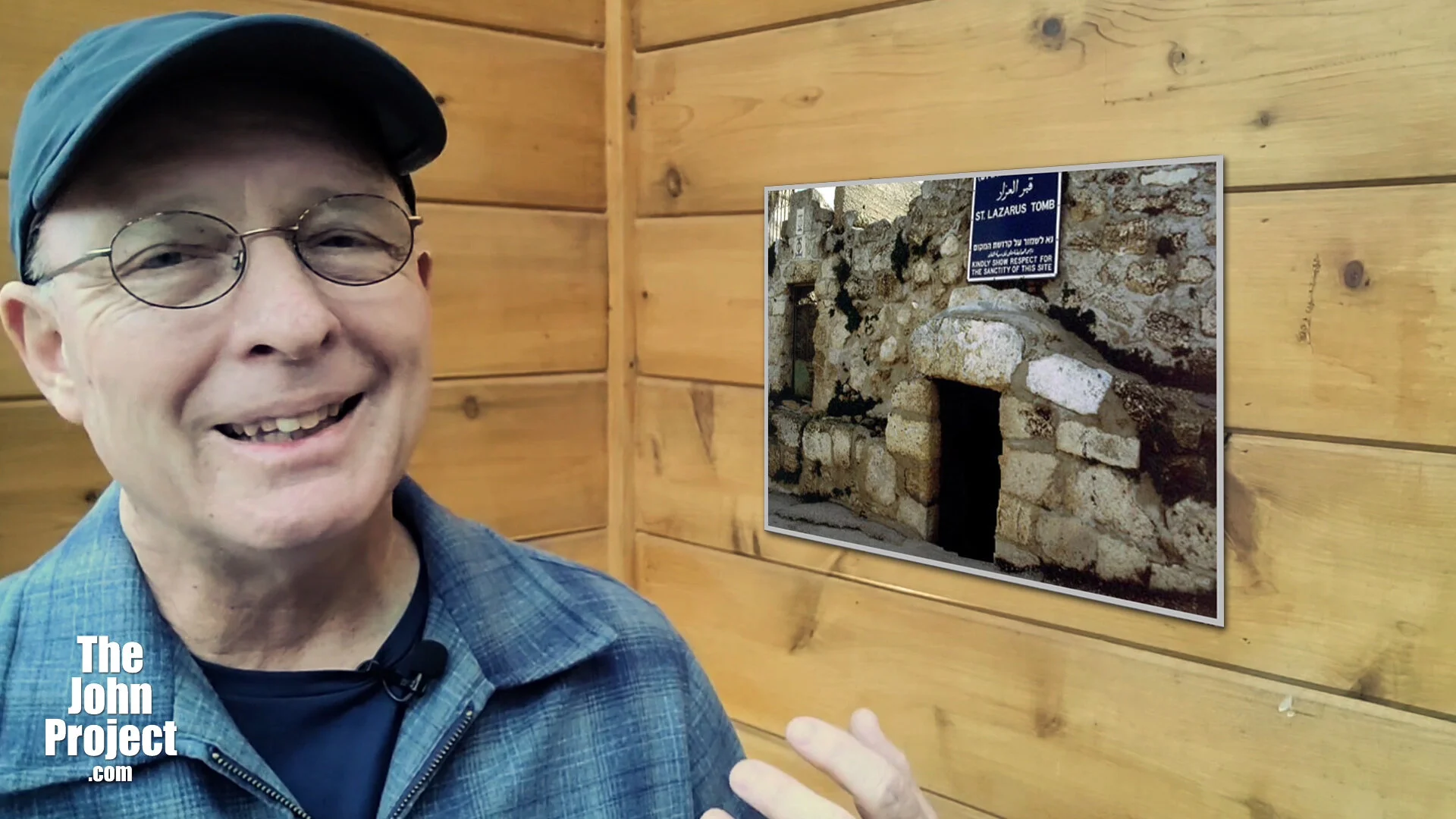
With the door to the tomb wide open so anyone who wanted could observe the miracle in progress, John 11:43 records the Lord shouting, “Lazarus, come forth!” Then, verse 44 announces that after four days of lifelessness, the formerly deceased friend of Jesus and brother of Mary and Martha walked out of his grave. His exit was somewhat impeded by the cloth wrappings that had been used to prepare his body for burial. So, Jesus invited some in the crowd of stunned observers to participate in the miracle and said, “Loose him, and let him go.”

Come on! This is just flat out amazing! Words fail. I don’t know what else to say but, “Praise God!” It’s an astounding event in the life and ministry of Jesus – so simply described, and yet so powerfully impactful. And that impact stands on its own without requiring any commentary from me.

But there is something in this passage I’d like to highlight, and it’s this: When the Lord speaks, it will usually produce something that needs to be unwrapped.

God’s words are powerful. They create, heal, and restore. They change things in both the visible and invisible realms. Listen to what the Lord himself said about this in Isaiah 55:11:

So shall my word be that goes forth from my mouth; it shall not return to me void, but it shall accomplish what I please, and it shall prosper in the thing for which I sent it.

Consider the magnitude of the cosmos that erupted from the simple phrase, “Let there be light.”

But his words are also always densely packed with divine perspectives, insights, revelations, and instructions. Psalm 119:105 says:

Your word is a lamp to my feet and a light to my path.

So, if the full dimension of what God intends to set in motion through his words is going to be realized, we need to be more than casual observers of what they produce. We also need to become willing to engage in the process of unpacking the depth and complexity of their meaning. And that’s true whether they’re shouted into a tomb, breathed onto the pages of Scripture, or whispered into our souls.

Whether it was contained within something someone said, a moving piece of music, a Bible passage, or a dramatic sunset, most of us have had moments when we sensed the Lord communicating with us. And it’s sobering to realize those expressions from his heart are meant to both do things and reveal things. So, let’s change how we respond to them.

That means instead of just enjoying the moment and allowing the message to quickly fade from our awareness, we’ll treasure his words enough to capture them by writing down what we believe we’ve heard, telling someone else, or prayerfully acknowledging them before God. We’ll make time to carefully consider what was said, meditating on it, probing its implications, and inviting the Holy Spirit to expand and illuminate it for us. And we’ll respond to what was said with appropriate surrender, repentance, and obedience.

When we learn to value the voice of God by doing these things, we’ll find ourselves becoming more sensitive to its sound. We’ll be quicker to recognize and respond to moments of divine encounter and discover they happen more often than we once thought. More importantly, as we become committed to the discipline of unwrapping, like the bystanders Jesus invited into Lazarus’ miracle story, we’ll be better positioned to participate in the wonderous things Jesus is always doing in the lives of others and the world around us.

John 11:41-42 • We’ve Been Heard

John 11 verse 41 tells us that when Lazarus’ grave had been opened, Jesus lifted his eyes heavenward and thanked his Father that he’d been heard. But it’s a little puzzling for us as readers because we’re not given the transcript of what had been said. We don’t even know when he said whatever it was. What we do know is that he went on in verse 42 to explain this expression of gratitude was for the sake of those observing him.

And since in a way, that includes us, I believe we need to stop and consider the implications of this curious and often-overlooked passage before moving on to the main event of Lazarus’ resurrection. Why? Because everything Jesus said and did was meant to be an example to us. These verses are not here just to pad the story. They teach us something.

The Lord clearly wanted the coming miracle to be seen as a response to something he’d requested from the Heavenly Father. He intended it to provide further evidence of his messiahship to those who were present and inspire their faith. But he was not thanking God in advance for what was about to take place. He said he was grateful he’d been heard. And that’s the key.

Although it can’t be known with certainty, it seems reasonable from the context to assume that if Jesus was referring to a prayer he’d offered at the scene, it would have been recorded for us. But it’s not. And I think that at least means he wanted the crowd to understand what they were about to witness was the powerful result of Son-to-Father communication that took place out of their hearing.

Could that private prayer have taken place just prior to these statements? Of course. But it could just as easily have happened hours or days before. And it’s entirely conceivable he was bringing to light something that happened as far back as when the news of Lazarus’ illness first reached him.

His response to that sobering message from Mary and Martha was emphatic. He said, “This sickness is not unto death, but for the glory of God…” And I think it’s quite possible his confident declaration flowed from an inner assurance that a silent request he’d made to the Father in that moment on behalf of his friends had been heard.

And if that’s the case, it’s a powerful lesson to us. In the time between that forceful proclamation and the moment Lazarus walked out of his tomb, things became progressively dark and appeared hopeless just like what sometimes happens in our circumstances.

But when we truly know we’ve been heard by God it literally changes everything. We find ourselves more able to trust our concerns to his plans and timing. It ushers us into what Philippians 4:7 describes as “the peace of God, which surpasses all understanding.” And as Jesus expressed, it gives rise to a thankfulness that’s not about an outcome we’re expecting but about the awesome knowledge that we’ve received an audience with the Lord of Lords and Maker of the Universe.

Earlier this week, our son called to tell us his doctor had removed some tissue from his leg, and it had been diagnosed as malignant melanoma. So, my wife and I immediately went to God in prayer, pressing hard into him until we sensed that deep assurance of his peace. We can’t know how the rest of this story will unfold at this point, so we’ll continue to pray our way through it. But we’re not afraid because we know we’ve been heard!

And that assurance can be yours as well regarding whatever you may be facing today. Claim the promise of Isaiah 65:24 where your Heavenly Father says, “...while they are still speaking, I will hear.”

John 11:38-40 • Move the Stone

I say this a little tongue-in-cheek, but one of the greatest acts of bravery I’ve ever witnessed happened a couple of years ago. Some skunks had moved into the crawlspace under our house. We became aware of it because they apparently got into a fight and sprayed each other which created an unbearable smell throughout our home. But when the pest control guy arrived and got to work, I was in awe of the fearlessness he exhibited as he suited up to go under the house directly into the teeth of that stinky situation. That took courage.

But all kidding aside, it takes far more courage to be willing to open the crypt in our souls where unbelief has buried the decaying remains of our broken dreams. We spiritually recoil from the risk of exposing the foul aroma emanating from the moldering mess of our disappointment, anger, and heartache. But the Lord must take us there if we’re ever going to experience a revival of hope.

And that’s the lesson of John 11 verses 38-40 which set up the climax for the account of the resurrection of Lazarus.

On the way to this miraculous moment, Jesus had repeatedly made it clear that death would not be the end of the story. He’d said this episode would instead result in a display of the glory of God. But those involved just couldn’t seem to believe there could be anything beyond the physical reality of Lazarus’ passing. So, as the Lord approached the cave where his friend’s lifeless body had been entombed, he was deeply moved not only with emotional empathy for their grief but also with sorrow over their lack of faith.

When he asked that the stone covering the grave’s entrance be moved, Martha resisted, cautioning him that the stench from the decaying body would be overwhelming. But I think, based on the Lord’s reply, that her response revealed more than a practical consideration. It exposed how far she’d allowed herself to travel down the road of unbelief.

Her earlier conversation with Jesus had awakened a fresh confidence in who he is. But unbelief buries hope, and much of hers was in the grave along with her brother’s body. She was grieving her way through to a future without him, and it seems she'd already become so invested in her new reality she just couldn’t imagine there was any alternative. I mean dead bodies stay dead and rot, end of story.

But as he always does, Jesus was challenging earthbound assumptions and illuminating a heavenly perspective. With a statement in the form of a question he called her to believe what he’d said over what she thought she knew. By asking that the tomb be opened, he was also asking her to be willing to reopen the story to a different ending. He was inviting her to trust the power and faithfulness of his word more than the limitations of her own understanding.

Jesus has an annoying habit of confronting our doubts. His loving heart just refuses to abandon us to that confining state which so vastly limits our experience of his glory

Do you have a buried hope rotting in a tomb dug by unbelief? If so, don’t be surprised when Jesus asks you to move the stone that covers that grave. We must brave the putrid scent of our faithlessness and expose the decomposing corpse of our unfulfilled hopes if we’re going to witness the unimaginable wonder of his power to restore what we thought was lost. He’s really good at resurrecting broken dreams, and you can confidently bring yours to him right now.

John 11:28-37 • Here and Calling

After bringing her pain and disappointment to Jesus and being sensitively escorted by him into a fuller understanding of who he is, John 11:28 tells us Martha delivered a deeply moving private message from him to her sister. She told Mary, “Jesus is here and calling for you.”

It’s hard to imagine that Mary hadn’t been notified of the Lord’s arrival in Bethany at the same time as Martha. They were grieving their brother’s passing together within a group of mourners. So, when Martha got the news and immediately went to meet him, it seems Mary made a personal choice not to. And I can understand that. There’ve been times when I’ve felt so let down by Jesus that I didn’t want to talk to him either.

Still, Jesus specifically reached out to her through Martha to assure her that in the midst of the heartache, confusion, and discouragement she was experiencing, he was present and inviting her to come to him.

Verse 29 tells us she quickly responded to his loving invitation, and verses 30 through 37 describe their encounter. Jesus didn’t scold her for hesitating to come sooner. He didn’t offer an explanation even though he knew a dramatic miracle was on its way. He simply allowed to her express her sense of betrayal and wept with her.

And that brings back a very vivid memory.

At the beginning of 1993, I had uprooted my family from their home, schools, church, and a city we all loved because I’d been asked by our denomination to provide pastoral leadership to a church in another part of our state that was in crises. It turned out to be a huge challenge. We had earnestly prayed before making the decision, but – almost immediately after moving – sensed we’d made a disastrous choice.

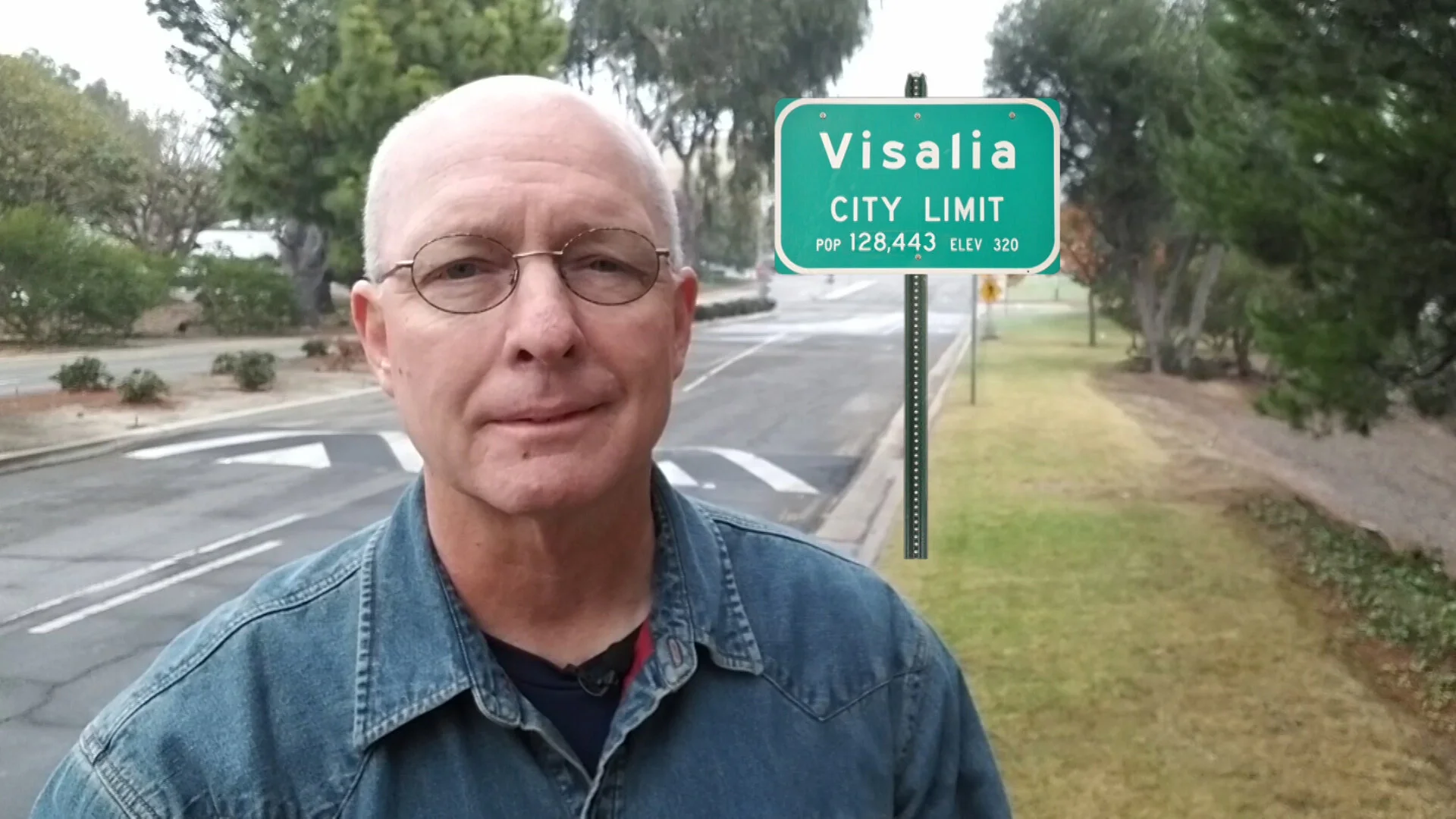
The church was in far worse shape than we were told, our kids had a very hard time adjusting, our finances took a hit, our marriage struggled, and I was mad at God. I found myself in the small, rural community of Visalia, CA – a place few people have ever heard of – feeling unappreciated, ineffective, unfruitful, and abandoned.

For several years prior, I’d attended a large gathering of pastors from around the world each fall in Southern California. It was always a highlight of my calendar. But that year I didn’t want to be around my peers and was in no mood to act like everything was OK between me and Jesus because it wasn’t. And I really couldn’t afford to go anyway which I was also upset about. But at the last-minute, I decided to go after all.

I entered the auditorium filled with 2,000 church leaders for the first session and tried to find a seat as far away as possible from the platform and anyone that might recognize me. I don’t recall the theme of the speaker’s message, but as he was concluding, he was encouraging us with a reminder that God had called us to the cities we served. With the implied answer being, "yes," he rhetorically asked, “Is there a man of God in New York? Is there a man of God in Chicago? Is there a man of God in Dallas? Is there a man of God in Los Angeles?” All world-class cities. And then he asked, “Is there a man of God in Visalia?”

I couldn’t believe it. Who’s ever heard of Visalia? But it was like Martha’s message to Mary, “Jesus is here and calling for you.”

After the meeting, I raced back to the room where I was staying, fell to my knees in the rich sense of his presence, and wept. I was awestruck all over again by the love of the one who showed up in my darkness and called me out of a crowd just so he could hold me in his arms while I unburdened my soul. And I rose from those sweet moments changed. My circumstances were the same, but I was now reconnected with my Savior and that made everything OK.

As with Mary, there was a miracle on its way that I wouldn’t have been able to understand at that point. But having the assurance of his empathy and nearness was really all I needed. And no matter what you’re going through, it’s all you need too.

Please hear this urgent, personal message from your Savior today, Jesus is here and calling for you.

John 11:21-27 • The Resurrection and the Life

As she brought the sting of her brother’s passing to Jesus, Martha expressed a very human mixture of both pain and belief. John 11:21 and 22 record her broken heart saying, “You could have prevented this,” while her faith was saying, “I still believe you can do something about it.” But these statements expose a very constrained perspective. And the conversation that follows in verses 23-27 reveals Jesus sensitively, compassionately, and purposefully escorting her toward an expanded and liberating one.

Like most us, she didn’t realize how much a fear of death was restricting her vision and restraining her spiritual freedom. She agreed with the Lord’s promise that Lazarus would rise again but said she believed it wouldn’t happen until “the last day.” And if you imagine that eternal life only begins at some point after this one has ended, then you can find yourself overly preoccupied with preserving this one, and our adversary will use the threat of its premature loss to blackmail you with fear.

Hebrews 2:14-15 tells us that part of Christ’s mission was to “…destroy him who had the power of death, that is, the devil, and release those who through fear of death were all their lifetime subject to bondage.” Of course, it’s natural and appropriate through healthy choices and reasonable caution to try and preserve your physical life. But like Martha, most of us don’t realize how much liberty we forfeit when we’re in the grip of the fear of losing it.

So, here we see Jesus calling one of his dear ones to an understanding that the life he offers begins the moment we place our faith in him and extends seamlessly into eternity unaffected by physical death. He told her that resurrection isn’t a future event, it’s a person. This passage contains the fifth of the “I am” statements in John’s Gospel. Jesus told Martha, “I AM the resurrection and the life,” and went on to say that that truth renders death both immaterial and impotent. He told her that those who believe in him may pass through the portal of physical death but never die.

I hope you’ll understand that I’m not trivializing what Martha was going through by sharing this story. But my wife and I really enjoy visiting Disneyland in Southern California where we live, and it’s been closed for months because of the Covid-19 pandemic. So, when we heard that Walt Disney World in Florida was allowed to reopen, we started considering the idea of making a trip out there to enjoy one of our favorite vacation activities.

We’ve been appropriately cautious regarding the virus, but last week, we boarded a plane and made a trip to the Sunshine State for a Disney fix. Was it risky? A little. But we found that the Disney company had gone to extraordinary lengths to protect their guests, and we had a wonderful time.

It devalues a precious gift from God when we take inappropriate risks and foolishly endanger our lives. On the other hand, it dishonors the magnitude of his salvation when we’re so concerned about not dying that we don’t really live.

But fear of death is not just about loss of life. It’s also about loss generally. There’s more than one kind of death a person can face. It’s possible to experience the death of a marriage, a friendship, or a dream for example. And the fear of that can be equally paralyzing. But Christ’s victory on the cross is expansive enough to swallow up that kind of anxiety as well.

At the close of this passage, Martha stepped into a fuller faith-perspective when she proclaimed her confidence in who Jesus IS. Belief in what he can DO is far less important than faith in who he IS. That’s the kind of faith that breaks the bonds of the fear of death.

Is that fear nibbling away at your life today? Are you anxious about losing something or someone? Remember, he IS the resurrection and the life.

John 11:17-20 • Heartache’s Question

It’s likely that Lazarus had already died by the time the urgent message from his sisters imploring Jesus to come to Bethany was received. Then, the Lord waited two more days before starting the journey. And John 11:17 states that by the time he arrived, Lazarus had already been in the tomb four days. Jesus’ apparent failure to answer their cry for help must have been heartbreaking and crushingly difficult for Martha and Mary to comprehend.

Verses 18-20 tell us that in the meantime, they’d been surrounded in their grief with the presence and comfort of friends as well as religious leaders who’d come from Jerusalem to be with them in their time of need.

Then, as word of the Lord’s imminent arrival reached them, we’re told that Martha immediately left that circle of support and went out to meet him, but Mary chose to remain with the mourners at their home. This difference in how they responded to Jesus in their time of disappointment and heartache begs an important question.

How should we handle those times of deep disillusionment when it feels like God has failed us? Do we run to bring our heartache and confusion to him or remain huddled with our grief and nurse our sense of betrayal?

I was a young staff pastor when I got a call in the middle of the night. An airline pilot who was part of the Bible study group I was leading had just perished in a plane crash. He was a new husband with a new baby, and his sudden passing shook me to my core.

My wife and I quickly joined the brigade of friends and family who were mourning with his wife and attempting to surround her with care and comfort. And although we all did our best to provide what she needed, we quickly discovered the limitations of what we could offer.

But I was amazed to watch her purposefully gather up her load of unbearable pain, profound loss, overwhelming fear, along with deep confusion and bring it to Jesus. It wasn’t that she was in denial of her grief process. But she had awakened, at a very deep level, to an awareness of her desperate need for the Savior in that dark season. And it was a wonder to witness the indescribable peace that began to settle over her soul as she welcomed the Lord’s presence into her pain and allowed him to shoulder her burden.

I believe that’s what opened the door to one of the most amazing things I’ve ever witnessed.

After I’d finished my part in the funeral service and taken my seat in the front row of the chapel, our lead pastor offered his closing remarks. He gave a brief and simple presentation of the gospel followed by an invitation to receive the saving grace of Jesus. He asked everyone to bow their heads. Then, he welcomed those who wanted to become Christ-followers to lift their eyes to meet his, and by that act acknowledge their decision.

Honestly, I was embarrassed by what he was doing. In the wake of such a devastating tragedy, I couldn’t imagine anyone choosing that moment to place their faith in Jesus. But with my head bowed and eyes closed, I heard my pastor begin to acknowledge those who were responding. I was so surprised, that I opened my eyes and started scanning the crowd for myself. And sure enough, people were committing their lives to Christ. And one specific couple captured my attention – the pilot’s parents. They walked into that service as unbelievers with every reason to not want anything to do with God. But they left that day having opened their hearts to the love of Jesus.

Disappointment, confusion, and sorrow always present us with a choice. And much is at stake. Do we wrap ourselves in the blanket of our pain and let it define our future or do we place it in the nail-scarred hands of the one whose comfort and power release redemption, restoration, renewal, and resurrection.

John 11:11-16 • A Rough Road on the Way to a Glorious Destination

Have you ever wished God would be more clear about something? I think every Christian has, especially when we're going through something difficult and are desperate to know why. Often in those situations, both the Bible and the inner voice of the Spirit seem silent or the answers given insufficient or confusing.

That’s what happened in John chapter 11 verses 11-16 when Jesus attempted to explain to his disciples why he’d waited before departing for Bethany to be with his sick friend. He tried to help them understand that he’d purposefully allowed Lazarus to die and sufficient time to pass so there could be no doubt about his being deceased. That way, when the Lord dramatically brought him back to life, their faith would increase.

But they struggled to comprehend.

Jesus was being neither cute nor mysterious when he told them that Lazarus was asleep. He was simply employing a commonly used idiom. And they would have immediately understood it in the context of the seriousness of Lazarus’s illness to mean that he had died. But the Lord added that he was going to wake him. And in their limited perspective, this changed the context. So, instead of understanding the combined statement as a figure of speech, they were forced to take him literally, and couldn’t grasp why Jesus needed to travel all the way to Bethany just to wake Lazarus from a nap.

Even when Jesus patiently clarified what he meant, they still seemed to have trouble putting it together.  First, even though Luke’s Gospel tells us they had twice previously witnessed Jesus bring someone back to life, it certainly wasn’t an everyday occurrence, and they likely struggled to believe he could do it after so much time had passed. And second, they must have been taken aback when he said he was happy about all this for their sakes because it would cause their faith to grow. What about the suffering of Lazarus and his sisters? He seemed to be saying this was a good thing.

But the rest of this story makes it very clear that Jesus wasn’t being unloving or insensitive. He was deeply moved by the profound suffering of his friends. But he was trying to help his disciples grasp the truth that sometimes God must allow us to experience a rough road on the way to a glorious destination when there’s no other route available.

Although from everything the Bible reveals about the nature of God, we can be confident he didn’t cause Lazarus’s sickness or death, it’s clear from the text that Jesus did allow it. But there’s a profound difference between causing and allowing. And this episode reveals that sometimes it’s just not possible for us to grasp from our limited perspective the wonderful things our unlimited God is up to in the midst of a challenging circumstance.

That can be a hard thing for us to admit. We give ourselves way too much credit. We like to think that the comprehension issue is never our fault. If God would just make himself clear, we’d certainly be able to understand. But this passage illustrates that that’s just not the case and beckons us to exercise more humility. It invites us to become more comfortable trusting the love and wisdom of our good God than insisting we understand.

In fact, I seem to remember a verse about that. Proverbs 3:5 says, “Trust in the Lord with all your heart, and lean not on your own understanding.”

John 11:7-10 • Freedom from Fear

Jesus had just received word that his friend, Lazarus, was gravely ill. But instead of setting out at once for the town of Bethany to be with him and his sisters in their time of need, he remained where he was.

Bethany was in the region of Judea and a suburb of Jerusalem where the religious elite had just recently tried to kill him on two separate occasions. So, his disciples must have assumed that his choice not to go was based on concern for his safety. But then, after two days, John 11:7 says he abruptly announced he was going after all and invited them to come along.

This obviously took them by surprise, and in verse 8, they questioned him about the wisdom of putting himself in harm’s way. But his answer in verses 9 and 10 made it clear the decision to not go sooner wasn’t made on the basis of fear.

He had twice previously (John 8:12 and 9:5) said he was “the light of the world.” So, they would have understood what he meant when, speaking metaphorically, he explained that if you keep your gaze fixed on the “light of this world,” you can boldly walk without being afraid of stumbling. He said it’s only the spiritually nocturnal – those who stick to the shadows – that have to worry about getting tripped up.

Let’s stop and consider the importance of these statements because a lot of us deal with fear. It takes many forms: fear of failure, fear of change, fear of heights, fear of flying, fear of spiders, fear of needles, fear of the future, fear of the dark, fear of missing out, etc. And although there’s probably not a technical term for it, early in my adulthood I experienced the sudden onset of a terrifying fear of being over water on a bridge.

My wife and I had just moved to the San Francisco area to join the pastoral staff of a new church, and some friends had come to visit. We took them to see the Golden Gate Bridge, and it was such a beautiful day, we decided to join a crowd of tourists and walk the span.

Everything was going well until we reached the point beyond the city-side anchorage where the bridge structure is suspended over the waters of the bay. Then suddenly, I had a panic attack, fell to my knees, and had to crawl back to where I felt safe. My reaction took me completely by surprise and was extremely embarrassing.

I’d crossed many bridges in my life to that point without ever experiencing an ounce of fear. But at that moment, I was truly terrified. And from that point on, crossing bridges over water became a serious issue for me made worse by the fact that God had called me to serve his church in a region connected by a network of them.

I tried avoidance, but that just wasn’t feasible in the Bay Area and didn’t work anyway. So, as an intelligent person who knew my anxiety was completely irrational, I tried reasoning with myself. But that didn’t work either. So, I decided to just give it time thinking it would eventually pass. It didn’t, and I finally came to terms with the fact that this was really a spiritual issue.

There are certainly rational fears that help protect us from harm. But irrational, constraining, and debilitating fears are not from God and keep us from experiencing life as he intends. In fact, 2 Timothy 1:7 says, “…God has not given us a spirit of fear, but of power and of love and of a sound mind.” And Romans 8:15 tells us we “…did not receive the spirit of bondage again to fear, but…the Spirit of adoption by whom we cry out, ‘Abba [or daddy], Father.’"

Both passages reveal that there’s a demonic personality at work behind our phobias but that it can be overcome by the powerfully liberating work of the Holy Spirit. And it’s clear from what Jesus told his disciples that fixing your gaze intently on him is what releases the Spirit to dispel our fears.

Once I understood this, every time I crossed a bridge, I would prayerfully look straight ahead as though I was literally focusing on the Lord, and found myself stepping out of the darkness of fear into the light of the power of the Spirit. And soon, I was completely free.

Are you being exploited by a spirit of fear? Stop stumbling in the shadows it produces and choose instead to step out into the sure footing of the light of Jesus. He’s ready if you are.

John 11:1-6 • A Win-Win Situation

Recently, one of my lifelong and best friends passed into eternity. By the time the cancer was discovered, he was diagnosed as terminal. When we spoke by phone, he invited me to join him in prayer for a miraculous healing, and he told me something I’ll never forget. He said he was in “a win-win situation.”

That unexpected statement startled me, and I was unsure how to respond at first. But as I considered it, I began to understand what he meant. My friend was referring to a joyous juxtaposition. His was the privilege of looking forward with glad anticipation to either the blessing of a miraculous healing or the even greater thrill of entering the eternal presence of his Savior.

It wasn’t a fatalistic expression of unbelief. He was describing the powerfully soul-securing state of every believer encountering life’s challenges. We are never victims at the mercy of our circumstances. We are victors in Christ no matter the outcome. His cross and resurrection have so completely overcome the dark intentions of any strategy of hell formed against us that we are always in “a win-win situation.” And although the circumstances we face are not always a matter of life and death, God’s will and ways can always be fully trusted without fear. That’s the glory behind 1 Corinthians 15:54: “Death is swallowed up in victory.”

And that truth connects directly to the amazing events described in John 11 which opens with an introduction to a set of siblings – Lazarus and his two sisters, Mary and Martha. This trio was new to John’s Gospel but not to his audience. Those early believers would’ve already been aware of them through both oral accounts and earlier-written Gospels. That’s why in verse 2 he could identify this Mary as the one who anointed the Lord with fragrant oil taking for granted his readers were aware of that event even though he hadn’t recounted that part of the story yet.

Although we’re not given the backstory, it’s clear that this family enjoyed a close relationship with Jesus. So, when Lazarus became seriously ill, his sisters sent word to let him know, indirectly pleading with him, on the basis of their friendship, to come and heal their brother. The response Jesus sent back in verse 4 assured them that this sickness would not result in death and that God would be glorified through it.

Then, we’re told something so striking that every time I read this passage I pause, shake my head, and contemplate its impact. Verses 5 and 6 state that because Jesus loved Martha, Mary, and Lazarus, he remained where he was for two more days.

This is completely unexpected. I always come to this section subconsciously anticipating it will say that because he loved them, he rushed to gather his belongings and raced to be with them in their time of need. But that’s not what happened. And although there is much more to come in this amazing and miraculous episode, let’s not miss the fact that it began with what seemed for all the world to be a heartless lack of action by the Savior.

I know what that feels like. There have been several times in my life when it seemed that God was unresponsive to my needs and I’d been left to wonder if he really loved me after all. And I’ll bet you’ve been there too. Maybe you’re there right now. If so, please let me encourage you that no matter what it may have seemed like at the moment of my disappointment when Jesus wasn’t responding in the way I’d hoped, he’s always proven himself loving, faithful, and powerful on my behalf in the end even when things turned out differently than I expected. Rest assured, that will be true for you as well. As followers of Christ, secure in his love and power, we are always in a “win-win situation.”

John 10:31-42 • Walk the Talk

Recently, another very prominent Christian leader was discovered to be involved in a sex scandal. And it broke my heart, as this kind of thing always does, not only for the damage to his life, his family, and his reputation, but for the wider fallout that affects all those in the circle of his influence. There is no private sin. When what we do fails to match what we say, it always wounds others and discredits our testimony.

But none of us is perfect. So, I’m grateful that Ephesians 4:8-9 states emphatically that salvation is a gift from God received by faith and not based on our works. God’s grace to forgive can never be overwhelmed by our failures.

But James 2:17 says that faith without works is dead. In other words, true faith is always a claim confirmed by action. And that truth challenges us to freshly consider whether our deeds confirm our declarations.

The final dozen verses of the tenth chapter of John describe Jesus purposefully drawing attention to his works.

The Pharisees were in the act of picking up rocks to stone him to death when – with biting sarcasm – Jesus asked which of his good works they were about to kill him for. Was it feeding the hungry, freeing spiritual captives, embracing outcasts, healing the sick? But they said the issue wasn’t his works. It was his claim. By claiming to be the Son of God he was guilty of blasphemy and deserved to die according to their law.

In response, he reminded them of Psalm 82 where God rebuked those who’d received a commission to serve as judges. They’d betrayed that calling by favoring the wicked instead of defending the poor, the fatherless, the afflicted, and the needy. Still, God (with an upper case “G”) referred to them as gods (with a lower case “g”). So, Jesus asked why it should be considered blasphemy to refer to himself as the Son of God, when he was the one sent by the Father to redeem their failures?

When the Pharisees had no answer, he corrected the basis of their indictment by pointing out that it really was about his works. If his works didn’t back it up, his claim was meaningless.

This only fanned the flames of their fury, and they tried to arrest him. But he escaped to a place along the Jordan River where John the Baptist had conducted his ministry. And we’re told that many people came to him there and confessed their faith in him specifically because John’s claims about him had been confirmed by his works.

It’s clear from this passage that there’s an important connection between claims and works, words and deeds, rhetoric and action. The significance of this relationship is at the heart of sayings like, “practice what you preach,” “actions speak louder than words,” and “if you’re going to talk the talk, you’ve got to walk the walk.”

Do our works align with our testimony? I believe this critical question needs to be asked and answered daily by all of us who claim to be Jesus-followers.

But I confess, most days, I’d rather avoid it. I don’t want to have to admit that I often don’t live my faith as fully as I’d like. Perhaps that’s true for you too. But if so, there’s good news for both of us.

In Acts 1:8, Jesus said the Holy Spirit would empower us to be his witnesses – to live as his representatives in this world. That means that when our works don’t match our claim, the story isn’t over and we’re not on our own to rewrite it. With humility and repentance, if we regularly and prayerfully welcome the Spirit’s transforming work in our lives, he has the power to enable us to “walk the talk.”

John 10:24-30 • Your Hand in His

John chapter 10 verses 24-30 describe Jesus being ambushed by the Jewish leaders demanding he plainly answer the question of his messiahship. He responded by saying he’d already been as clear as possible on the subject both with words and with miraculous deeds. He told them the problem was not a lack of HIS clarity but a lack of THEIR faith. They were simply choosing not to believe the obvious and there was nothing he could do to change that. No amount of verbal debate or physical evidence can change a closed mind.

How sad to think that these men could be face-to-face with the Son of God and remain blind to that truth by choice, oblivious to his divinity not because they hadn’t seen or heard, but because they’d refused to acknowledge what they’d seen and heard.

But the Lord went on to say there are those of us he refers to as, “my sheep,” who choose to hear his message and act on it in faith by becoming his followers. And to us, he said he gives the twin promises of life in the hereafter and security in the here and now. He declared we will have eternal life and experience it within the safety of his protective grasp, a refuge beyond the reach of any attempt to separate us from him.

That powerful statement deserves to be rejoiced in, highlighted, bookmarked, and committed to memory. No one can “snatch” us from his hand. He will never let go of us.

The problem is…that doesn’t prevent us from letting go of him.

I took one of my young grandsons with me to the store the other day. As we made our way through the parking lot, I held his hand to ensure his safety. And as we walked, I could feel his grip. He was holding on to my hand too. The sensation was a heartwarming affirmation of his trust, but it was more than that. It was what made it possible for me to protect him. If he’d let go of me, pulled away, and insisted on going off on his own, he would have exposed himself to unanticipated dangers, and it would have been nearly impossible for me to keep him secure.

And that can happen in our relationship with Jesus if we in pride conclude we don’t need him or in fear assume we can’t trust him and then choose to loosen our grip on him. His promises remain, but we are in jeopardy of removing ourselves from their fulfillment and becoming spiritually vulnerable. And the devil is always ready to exploit that vulnerability to pry our souls loose from their resting place within the Savior’s hand.

The beautiful thing is you don’t have to enable that strategy. If for any reason it seems the strength of your hold on Jesus has weakened, his on you is powerful. Press into it. Right now determine with fresh commitment to hold tightly to him in faith and firmly keep your hand in his.

John 10:22-23 • A Weather Report

I believe what the Bible says of itself, that it is God speaking to us. And because I’m convinced the Almighty is never superfluous, I find myself drawn with curiosity to passages containing words that don’t at first glance seem necessary. Over the years, I’ve learned that these are usually designed to attract our attention and reveal rich meaning when carefully considered.

John 10:22 and 23 contain one of these. They open a section describing a confrontation of Jesus by the Jewish leaders that took place about two and a half months after his parable of the Good Shepherd. They provide us with the time of year, location, reason for his being there, and a description of the weather. That’s the one that gets me. Why do we need to know what the weather was like?

I’ll come back to that in a minute, but first let’s note that this showdown took place in Solomon’s porch, a covered, outer corridor on the east side of the temple complex. But it would also become the meeting hall of the first Christians following the birth of the church on the Day of Pentecost. And I think it’s super cool to contemplate that Jesus would so thoroughly triumph over his opposition that this location where the Jewish elite tried to rhetorically and literally ambush him would become the fountainhead of his gospel’s global triumph as his followers took the good news from there to the ends of the earth.

The text also informs us that this event occurred during the Feast of Dedication which was celebrated in mid-December. That lets us know when Jesus was there, but it also explains part of the reason why. This feast was an annual commemoration of the cleansing of the temple by the Maccabees in 167 B.C. and the restoration of worship there after it had been very purposefully desecrated by Antiochus Epiphanes. It was an event worth celebrating for sure, but this was not one of the feasts prescribed by God in the Old Testament and requiring a Jerusalem pilgrimage. So why did Jesus visit the temple during that time and why is his attendance noted?

I think he was using the occasion of this celebration of temple-cleansing as a not-so-subtle announcement that he would soon be offering his life’s blood as the ultimate agent of cleansing for all the ways sin has desecrated our lives so that he could make it possible for us to become temples of the Holy Spirit as described in 1 Corinthians 6:19.

And that brings me back to the weather report.

The fixed date of the Feast of Dedication already established the time of year as the month of December, so why add the phrase, “it was winter,” unless God wanted us to notice something else?

The Greek word translated as “winter” here literally means storm or tempest. So, the Bible is calling attention to the fact that Jesus had entered Jerusalem that day during a rainstorm. I’m sure you’ve noticed that good novelists often set the mood for dark scenes in their stories by using vivid descriptions of bad weather. And although I’m certainly not equating this passage from the Gospel of John with a work of fiction, I do think God has included this phrase to evoke a feeling.

As Jesus’ earthly ministry was about to enter its final months, I think God intended us to engage our spiritual imaginations at this point by visualizing him in an open portico, exposed to a cold rain, bracing for another round of harassment by the religious elite, but advancing steadily toward the cross.

It’s way too easy to read the Bible dispassionately like a textbook. But this simple phrase calls to us, inviting us to reconnect with the narrative in a deeper, more emotional way and to feel something we may have lost touch with – gratitude.

As we read the account of our savior moving through the gathering spiritual storm toward our redemption, let’s not forget that although fully God, he was also truly human and experiencing all of this from that perspective. And let’s allow this simple image of Jesus in the rain to fill our hearts with renewed reverence and grateful worship.

John 10:17-21 • Authority Under

John 10:17-21 contains the closing stanza of Jesus’ shepherd parable and the response to it by the religious elite.

Having earlier described himself as the Good Shepherd who lays his life down for the sheep, Jesus said he does so as an expression of his power, a translation of a Greek word used in the original text which means having authority to act. He subtly acknowledged his awareness of the Jewish leaders’ plan to kill him that continued percolating in the background, and he declared that when the time finally came, his life would not be taken in weakness but freely given as an exercise of his authority. He said the use of his power in this way was commanded by and pleasing to the Heavenly Father.

That completely baffled the Pharisees. It was simply unheard of that someone would use their power to serve others. In their experience, leaders gained and exercised power over others for their own benefit. Jesus had expressed a concept so foreign to them that they began to debate among themselves whether he was demon-possessed and insane.

But some of them had trouble accepting that explanation because they’d just witnessed a display of that kind of authority when Jesus healed the blind man on the previous sabbath. He had used his power to bless the man with sight and then didn’t even stick around to get the credit. He had nothing to gain and much to potentially lose by breaking sabbath restrictions to minister to him. But he did it anyway.

And that’s the very definition of authority in God’s dictionary – humbly employing every right, advantage, position, gifting, influence, mastery, skill, insight, prestige, sway, strength, prerogative, license, clout, and esteem we possess in the service of others no matter the cost. As his children, we have been given the privilege and responsibility of modeling a different way to be powerful.

But it turns out that’s easier said than done. We often appear to be just as enamored with the idea of hierarchical positions of power as anyone else. That’s why in Matthew 20:25-28, Jesus responded to the request of two of his disciples that they be given positions of power in his kingdom saying:

"You know that the rulers of the Gentiles…exercise authority over them. Yet it shall not be so among you; but whoever desires to become great among you, let him be your servant…just as the Son of Man did not come to be served, but to serve, and to give His life a ransom for many."

He taught us by his words and his life that the righteous way of expressing power is not from a position above others but from beneath them, lifting them up instead of pressing them down, not an authority over but an authority under.

And our world is in desperate need of that example right now. Our institutions – commercial, political, social, educational, judicial, relational – are all engaged in a fierce wrestling match over the questions of who should have power and how it should be used.

My friends in the faith, let’s rise to the challenge, or should I say bend beneath it. Instead of joining the world in striving to get to the top, let’s race each other to the bottom. Let’s put the power of our God on display by shouldering the weight of the burdens that don’t belong to us but are ours to bear as we serve others in his mighty name.